Give Us a Call!
(612) 998-9500
Give Us a Call!
(612) 998-9500 


After a Minnesota storm drops hail or pushes strong winds through your neighborhood, siding storm damage isn’t always obvious from the sidewalk. Some signs show up immediately — cracked panels, missing trim, dents in aluminum or vinyl. Others only reveal themselves weeks later, once water has worked its way behind a loose seam. This guide walks you through what to look for, how to document it, and how to move forward without pressure.
In This Article:
- Stay Safe Before You Inspect
- Signs of Hail Damage on Siding
- Signs of Wind Damage to Siding
- Beyond the Panels: Trim, Corners, and Openings
- Next Steps: Document First, Decide Later
- Frequently Asked Questions
Stay Safe Before You Inspect
Wait until the storm has fully passed before stepping outside. If there’s still lightning, standing water near electrical equipment, or downed power lines, stay inside. Once conditions are clear, keep both feet on the ground — no ladders, no climbing.
Most siding storm damage can be assessed from your yard or driveway. A slow walk around the perimeter, checking each wall section, is enough to get a working picture. If a neighbor reported a severe thunderstorm or hail event, check the NWS Twin Cities storm reports to see whether hail or high winds were confirmed near your address. That context is useful when you talk to your insurer.
Signs of Hail Damage on Siding
Hail damage on siding looks different depending on the material. Here’s what to look for across the most common types:
Vinyl siding
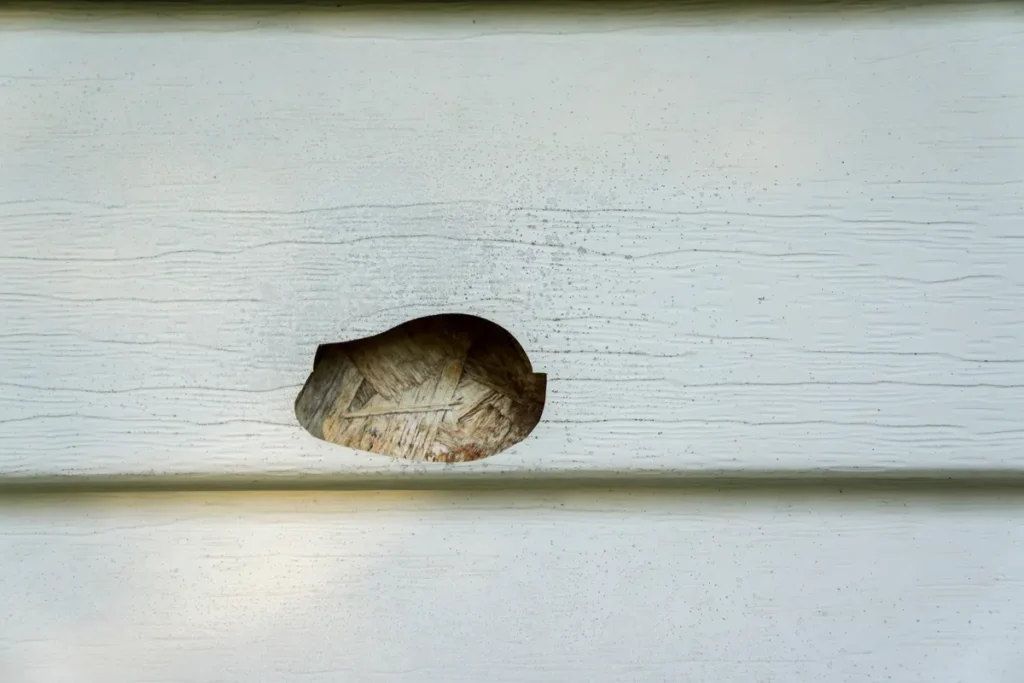
- Circular cracks, chips, or punctures — often about the size of a dime or quarter
- Surface dents that may or may not crack all the way through
- Crazing (a fine spider-web pattern of cracking) around impact points
Fiber cement siding
- Chipping or flaking at impact sites
- Paint or finish disruption without visible cracking through the board itself
Aluminum or steel siding
- Visible denting — easier to spot because the material deflects rather than cracks
- Paint scuffs or exposed bare metal at impact points
Also check nearby soft metal surfaces: gutters, downspouts, window screens, and AC unit fins. These materials dent easily and can give you a sense of hail size and storm intensity before you look at the siding itself.
Signs of Wind Damage to Siding
Wind damage to siding tends to show up as displacement rather than breakage. On a post-storm walk-around, look for:

- Lifted or bowing panels — wind can get underneath a panel and pry the bottom edge away from the wall
- Missing sections — panels, soffit pieces, or trim that are simply gone
- A loose locking hem — the top edge of each panel locks into the course above it; a panel that’s visibly drooping or tilted may have come unlocked
- Panels that rattle in a light breeze — properly seated siding doesn’t move much; rattling suggests something has shifted
- Displaced accessories — J-channel, corner trim, and utility trim can all be knocked loose by strong gusts
Any gap in the siding is an opening for water intrusion. That’s why even minor-looking wind damage to siding is worth noting and photographing before you decide what to do next.
Beyond the Panels: Trim, Corners, and Openings
A complete picture of siding storm damage includes more than the open wall sections. Windows, doors, and corners take more stress during wind-driven rain than flat panel areas do. Water under pressure follows any gap — around window casing, under corner trim, or through a cracked caulk joint at a door frame.
After a significant storm, look at:
- Window and door casing — any lifted edges, gaps in caulk, or visible cracking in the trim
- Corner trim — outside corners take direct impacts from debris and hail; inside corners can trap water if the trim has shifted
- Utility penetrations — outlets, hose bibs, dryer vents, and similar pass-throughs are common water entry points if the surrounding sealant has been disturbed
You don’t need to pull anything apart for this check. A visual inspection from a few feet away is enough. If something looks like it’s opened up since before the storm, note it and photograph it.
Next Steps: Document First, Decide Later
Take photos before anything is touched
Photograph every area that looks unusual. Wide shots of the full wall section first, then close-ups of specific marks, cracks, or lifted areas. Date-stamp the photos if your phone allows it, and note the storm date separately — that detail matters for insurance purposes.
Review your policy before calling a contractor
The Minnesota Commerce Disaster Information Center provides neutral guidance on navigating home insurance claims after property damage. What’s covered depends on your policy — a contractor can’t determine that for you, and a reputable one won’t claim to.
Watch for high-pressure contractor behavior after storms
After significant weather events, some contractors show up unsolicited and push for fast signatures or upfront deposits. Minnesota Commerce has flagged this pattern as a recurring concern following storm events. A trustworthy contractor will:
- Be licensed in Minnesota
- Provide a written estimate with time to review it
- Not pressure you to assign your insurance benefits before your claim has been assessed
Our crews have worked across the Twin Cities long enough to know that good storm repair work doesn’t require urgency tactics. If someone is pushing you to sign before your insurer has weighed in, that’s a reason to slow down, not speed up.
Frequently Asked Questions
What does siding storm damage look like? It depends on the storm and the material. Hail typically leaves circular dents, cracks, or chipped coating on panels. Wind damage shows up as lifted sections, missing trim, or panels that have come loose from the wall. Both can be subtle — a careful walk-around after any significant storm is a useful habit.
How can I tell if hail damaged my siding? Look for impact marks, circular cracks, or chipped finish. Also check your gutters and downspouts — dented soft metal is often the clearest evidence that hail reached your home, and the size of those dents gives a rough sense of hail intensity.
Should I take photos right after a storm? Yes, as soon as it’s safe to be outside. Date-stamped photos document your home’s condition at the time of the storm, which is useful whether or not you end up filing a claim.
How do I avoid storm-chaser pressure? Don’t sign anything the same day a contractor shows up uninvited. Verify they’re licensed in Minnesota, ask for a written estimate, and let your insurer assess the damage before you commit to repairs. There’s no deadline that requires a same-day decision.
Can wind loosen siding that otherwise looks fine? Yes. Wind can unseat a panel’s locking hem without cracking or visibly deforming it. If panels are rattling or you can see a slight gap at the top edge of a course, a contractor should take a closer look.
Take It One Step at a Time
A thorough walk-around after a Minnesota storm puts you in a much better position — for a conversation with your insurer, for getting accurate estimates, and for making a calm decision about what actually needs to be done. Siding storm damage ranges from purely cosmetic to genuinely urgent, and the difference usually becomes clear with a proper assessment.
If you’d like a professional second set of eyes on what you found, contact Voyager Exteriors to request a project consultation. Learn about your options when deciding to replace or update your siding.
Learn more about our siding services → Voyager Exteriors Siding