Give Us a Call!
(612) 998-9500
Give Us a Call!
(612) 998-9500 



The best time of year to build a deck in Minnesota might surprise you in terms of project timing. It’s the beginning of fall, and some Twin Cities homeowners might be wondering if they missed their window on building their dream deck. The honest answer is that, with the right contractor, winter isn’t much of a factor at all. If you are wondering how winter changes your deck installation timeline, Voyager Exteriors is here to guide you through the most important things to plan for.
In This Article:
- The Short Answer
- What an Experienced Crew Plans For
- Permits Are the Real Clock
- A Fall Start Works Both Ways
- Questions to Ask Before a Fall or Winter Start
- FAQ
- So, When Is the Best Time of Year to Build a Deck?
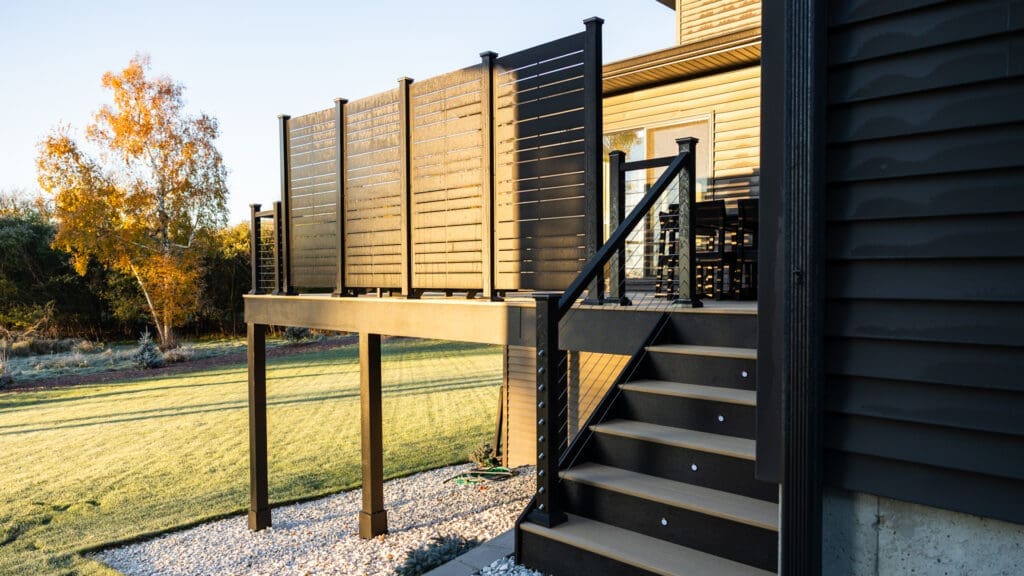
“Fall and winter deck construction in Minnesota — the best time of year to build a deck depends on planning and a prepared crew.”
The Short Answer: Winter Is Coming, but That Matters Less to an Experienced Twin Cities Contractor
Twin Cities contractors like Voyager Exteriors are experienced in building decks during the cold winter months. For most homeowners looking to build during the fall and winter months, the only meaningful thing that changes is what needs to be planned for:
- Frost and footings — footings must reach below the frost line (42 inches or deeper in most of Minnesota), and fresh concrete needs protection while it cures. The good news: some footing options don’t rely on poured concrete in the same way.
- Cold Weather Best Practices — below about 40°F, both concrete curing and material handling need cold-weather care. Top-rated contractors like Voyager Exteriors — certified in brands like Trex, TimberTech, and Westbury — know to anticipate that on the jobsite.
- City Permit Timing — city permits are often the biggest scheduling factor and can take as long as the build. The upside: winter is a slower season for most contractors, so getting on the schedule now means you’re ready well before spring.
- Decking materials — composite and PVC boards expand and contract with temperature, so gap spacing follows the manufacturer’s cold-weather specs.
- Daylight and jobsite conditions — shorter days, frozen ground, snow, and ice all affect how quickly and safely a crew can work.
A great winter build comes down to a little extra experience and planning for winter conditions. Cold-weather months are a great time to get on the schedule, as contractors are seasonally less busy, so your project has a bit more flexibility and attention. For a contractor that knows how to plan for cold-weather builds, winter is just another day on the job.
What an Experienced Crew Plans For
Early fall often works like an extension of summer — a mild September day builds a deck no differently than July does. Things change later, as nights cool toward freezing. The National Weather Service places the Twin Cities’ normal first fall freeze around October 1–10, and earlier than that north of the metro, so the calendar does tighten as fall goes on. [EXTERNAL LINK: NWS Twin Cities first-freeze information → weather.gov/mpx]
None of that stops a prepared crew. Here’s what we plan for — and what to look for in any contractor you’re considering.

Frost, Footings, and Concrete
Deck footings have to sit below the frost line so the seasonal freeze-thaw cycle can’t heave them out of place over the winter. Your local building department sets the exact depth, and in most of Minnesota it may be as deep as three feet. You can check your local frost-depth requirements or ask your contractor for guidance.
Concrete itself isn’t off-limits in the cold. The American Concrete Institute defines cold-weather conditions as roughly below 40°F during curing. At that point, the concrete has to be kept from freezing early and protected from rapid temperature swings. In practice, that means an experienced crew plans the protection — insulated blankets, enclosures, or heat — that will make sure the footing is poured correctly.
And poured concrete isn’t the only route. Engineered systems like Diamond Pier and helical (screw) pile footings can support a deck without relying on concrete that has to cure in the cold. The right footing is always chosen to fit the project — soil, load, and local code all factor in — but where a cold-weather pour would slow things down, one of these alternatives may be a better option worth asking about.
Diamond Pier – Frozen Soil FAQ
Diamond Pier – Frost Heave & Other Forces
Pro Helical – Installation and Thaw Guidance
Decking Materials in the Cold
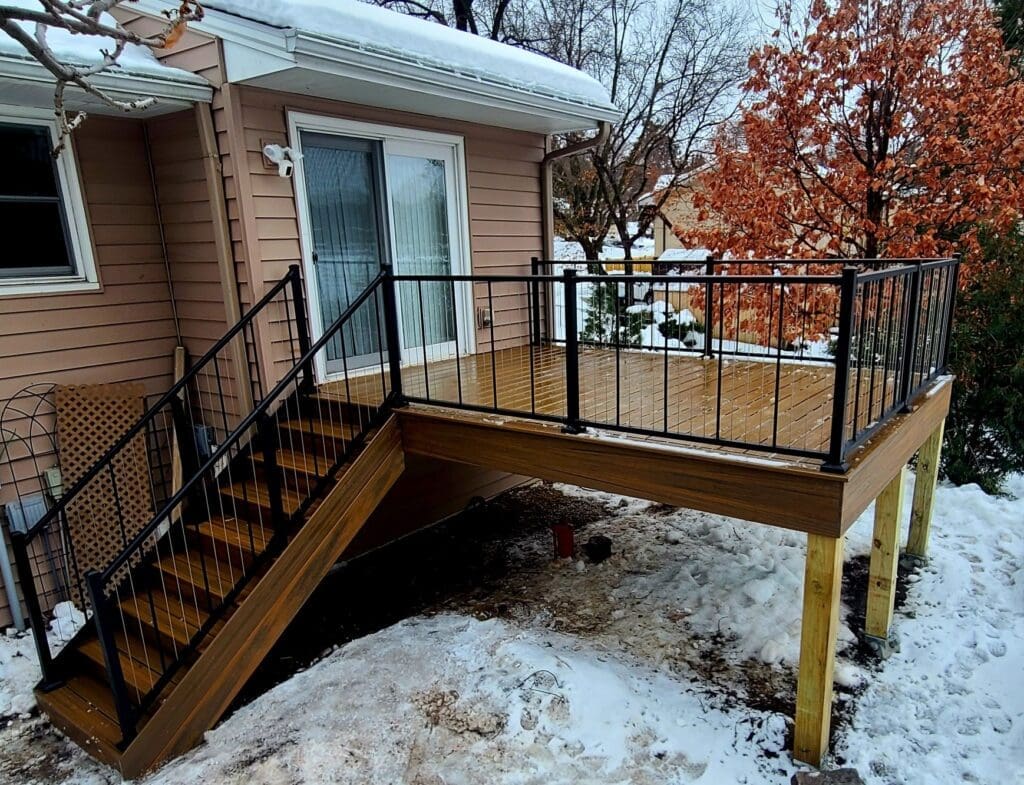
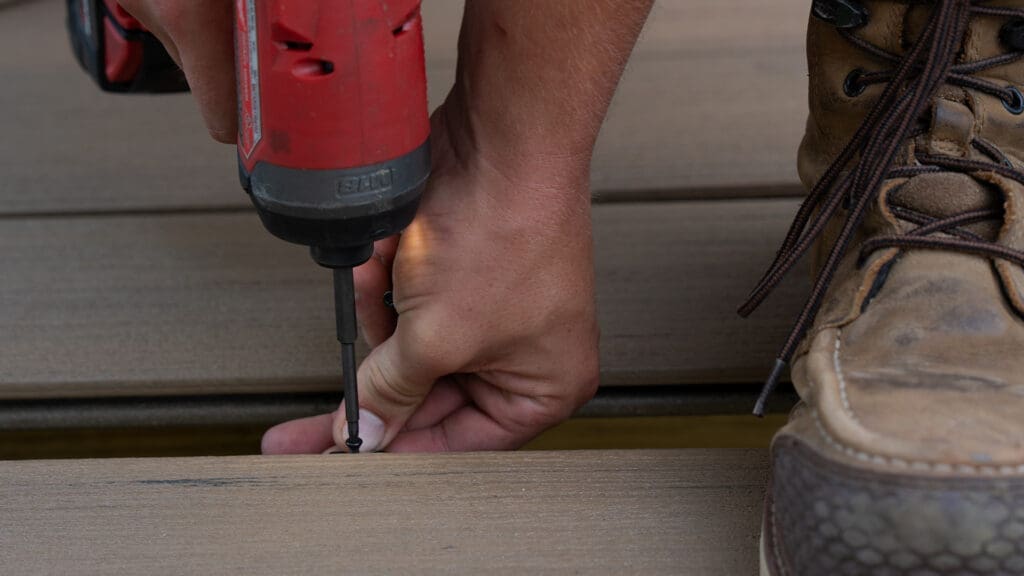
Composite decking materials like Trex and TimberTech expand and contract with temperature, and every manufacturer publishes gap-spacing guidance tied to the temperature on installation day. Get that spacing wrong in the cold and boards can gap or buckle once the weather shifts.
Installing to manufacturer specifications can make the difference between a great winter build and a headache with costly repairs in the spring. A certified crew knows the products they install, and part of that certification is understanding how the materials perform in cold weather. A certified crew can make sure the product performs the way the manufacturer intended. If you already have a decking product in mind, ask your contractor how its cold-weather guidance affects your timeline.
Daylight and the Jobsite
Late-fall days are short, which can stretch a project’s calendar even when the work itself is routine. Frozen or snow-covered ground complicates excavation and grading, and ice adds a safety factor that shapes how a crew moves on site. None of it stops an experienced team that can plan around the added cold-weather conditions.
Permits Are the Real Clock
If anything squeezes a fall start, it’s usually the city permit process — not the weather. The City of Minneapolis notes that almost all construction projects need a building permit before work begins, and its general estimate for residential plan review is 15 business days for initial review. That’s one city’s guideline; timelines vary by municipality and by project, so check with your local building department. Deck construction across Minnesota is governed by the 2020 Minnesota Residential Code plus local requirements. Minnesota DLI — Residential Decks and the 2020 Minnesota Residential Code
Starting the paperwork and city permit process in the fall gives you more flexibility in the early winter months. Most homeowners don’t factor in the timing of the permit process when planning a deck installation — but getting it moving early keeps every option open, whether you build this year or first thing in spring.
If city permits seem like a headache, we handle all of it as part of our refined process. Learn more about Voyager’s Deck Services
A Fall Start Works Both Ways
Winter is often treated as a hard deadline, “Get it done now, before it’s too late and winter hits!”
But at Voyager Exteriors, we see it differently. It’s a fantastic opportunity to plan ahead. A prepared contractor can offer flexibility in the cold-weather months and give you more attention during a slower part of their season. Depending on your project and timeline, a fall conversation leads to one of two good outcomes:
- Build this season. If your scope, your permit, and our schedule line up, there’s often still room to get the deck in before deep winter — and you head into spring with it already finished.
- Design now, build early spring. If a cold-weather build isn’t the right fit, the fall and winter go toward design and permitting. When spring arrives, you’re first on the schedule instead of waiting behind everyone who started calling in April.
Either way, reaching out in the fall puts you ahead rather than behind. It won’t automatically make the job cheaper or faster — but it does put you in control of the timeline instead of the weather.
Questions to Ask Before a Fall or Winter Start
The right contractor will have clear answers to all of these:
- Have you built decks in the Twin Cities through late fall and winter? How did those timelines run?
- How do you protect footings and concrete if temperatures drop during curing?
- Are you certified to install the decking product I want, and how does its cold-weather guidance affect my schedule?
- What’s your read on permit and plan-review timing in my city?
- If the weather turns mid-project, what’s the plan?
Vague answers to these are worth noticing. The success of cold-weather building is driven by adequate preparation.
Frequently Asked Questions
Is September or October too late to build a deck in Minnesota?
Usually not. Early fall often still offers mild working conditions, and a later start comes down to scope, permitting, and a contractor equipped for the cold. The permit timeline is typically a bigger factor than the temperature.
Can deck footings be poured when nights are near freezing?
Yes, with the right precautions. Concrete can be placed in cold conditions when it’s produced, placed, cured, and protected properly — the American Concrete Institute flags temperatures below about 40°F as the point where those protections matter most. An experienced crew builds that protection into the plan before pouring.
Do I need a permit, and how long does review take?
In most Minnesota cities, a deck requires a permit before work begins, under the 2020 Minnesota Residential Code plus local rules. Review time varies — Minneapolis, for example, estimates 15 business days for initial residential review — so check with your local building department early.
Is it smarter to design in fall and build in spring?
For some projects, yes. Handling design and permitting over the winter means you’re ready to build the moment spring conditions arrive, ahead of the seasonal rush. Whether that beats a fall build depends on your scope and timeline.
Does composite decking have seasonal installation limits?
It has cold-weather installation guidance rather than hard limits. Because composite and PVC boards move with temperature, manufacturers specify gap spacing based on install-day conditions. A certified installer follows that guidance so the deck performs as intended year-round.
So, When Is the Best Time of Year to Build a Deck?
Honestly, it’s whenever you’re ready — as long as you’re working with a crew that’s ready for the season. Summer is popular, but it’s also the busiest stretch and the longest wait. Fall and winter trade a little extra planning for a shorter line and a deck that’s finished, or fully permitted, before the spring rush.
So if it’s fall and you’re wondering whether you missed your window, you almost certainly haven’t. Voyager Exteriors builds decks across the Twin Cities metro through the colder months, and we’re glad to walk through what makes sense for your home — no pressure, just a straight answer.
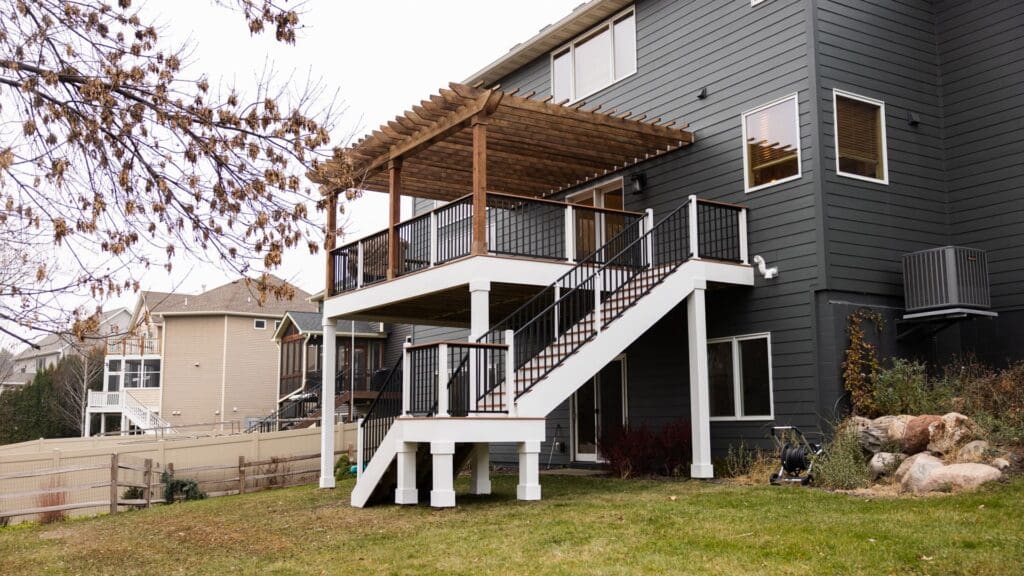
“The best time of year to build a deck is whenever you and your contractor have a plan for cold weather. “
Request a low pressure consultation at Voyager Exteriors.