Give Us a Call!
(612) 998-9500
Give Us a Call!
(612) 998-9500 



If your deck turns into an oven by 2 p.m., you’re not alone. These deck shade ideas can help you reclaim those afternoon hours — whether you want a quick fix this weekend or a built-in solution that changes how you use your outdoor space entirely.
In This Article:
- Why shade matters for Minnesota decks in July
- Temporary deck shade ideas
- Built-in deck shade ideas
- How to choose shade based on sun, wind, and snow
- Questions to ask before adding permanent shade
- FAQ
Why Shade Matters for Minnesota Decks in July
Minnesota summers are short, and the window to actually use your deck is narrower than it should be when afternoon heat makes it uncomfortable. July and early August bring high humidity alongside intense sun — and a west- or southwest-facing deck can stay hot well into early evening when solar gain peaks.
The National Weather Service Twin Cities office regularly flags heat and humidity events for the metro area, and those conditions are the exact moments when a shaded deck goes from nice-to-have to genuinely useful. Without shade, surfaces — whether composite or wood — hold heat, furniture becomes too hot to touch, and the space sits empty during the hours families most want to be outside.
The right shade setup blocks direct sun, keeps surfaces cooler, and makes the space livable again. Which option makes sense depends on your deck’s orientation, your budget, and how much of a permanent change you want to make.
Temporary Deck Shade Ideas
If you’re not ready to commit to a structural project, temporary solutions can make a real difference while you figure out what you actually want long-term.
Umbrellas and Movable Shade
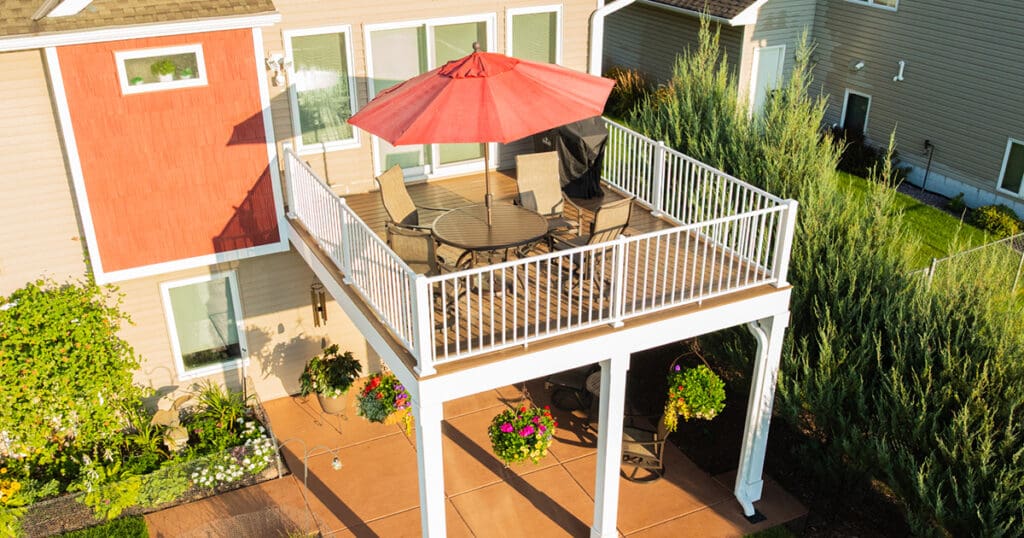
A patio umbrella is the fastest, most flexible deck shade idea available. Market-style umbrellas — the kind with a central pole mounted in a heavy base — cover a dining table or seating area effectively. Cantilever umbrellas mount to a side post and tilt to follow the sun, which gives more flexibility for odd-shaped spaces or areas where a center pole is in the way.

The trade-off: umbrellas need to come down when storms roll in. Summer thunderstorms are common across the Twin Cities metro, and a large umbrella left up in wind can get damaged or knock things over. If you go this route, plan for a base heavy enough to stay stable in a breeze and easy enough to close quickly when the radar lights up.
Shade Sails and Fabric Solutions
Shade sails are tensioned fabric panels anchored to posts or attachment points at multiple corners. They block UV light effectively, come in a range of sizes and colors, and give a clean, design-forward look without requiring a full structure.
In Minnesota, installation matters more than the product itself. Anchor points need to handle wind load — not just the weight of the sail. The sail should come down for winter, both to protect the fabric and to avoid snow sitting on it. Whatever you’re anchoring to (deck posts, exterior walls, or added poles) should be secured for your specific deck layout, not just bolted loosely and hoped for the best.
Built-In Deck Shade Ideas
If you want something permanent, you have a few directions to go — each with meaningful trade-offs.
Pergolas
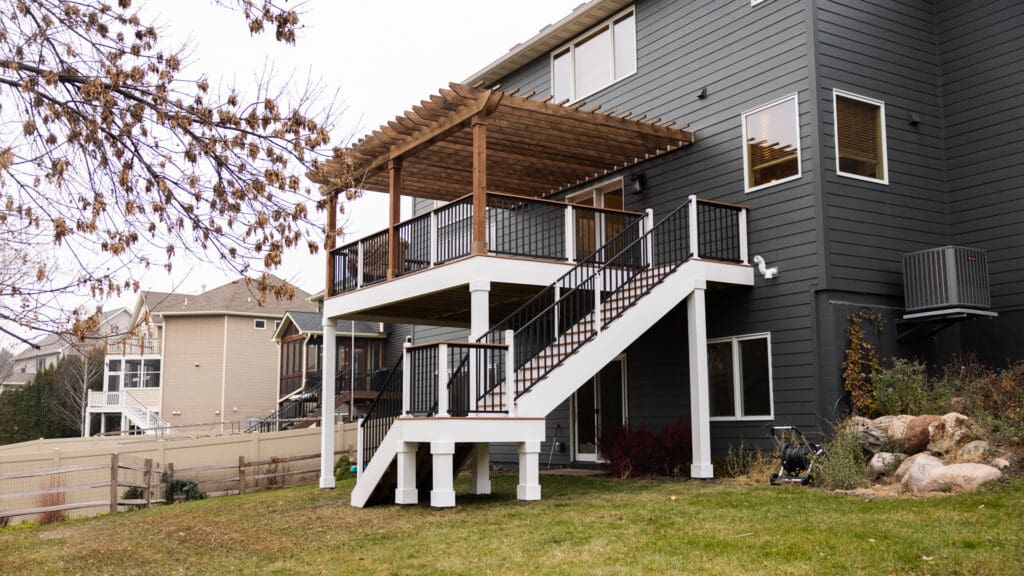
A pergola is one of the most popular covered deck ideas for a reason. It adds structure, visual weight, and a sense of enclosure without fully boxing in the space. Open rafters provide partial shade and filter direct sun throughout the day.
The honest trade-off: a traditional pergola doesn’t block overhead sun the way a solid roof does. In direct afternoon sun — especially on a west-facing deck — you’ll still feel the heat through the gaps. Many homeowners add a retractable shade canopy, shade cloth, or climbing plants over time to improve coverage. Whether a pergola gives you enough shade depends on your deck’s orientation and what you’re trying to accomplish.
A pergola attached to your home is typically treated as a structure for permit purposes, and requirements vary by municipality. Check with your local building department before you start.
Covered Decks and Roof Structures
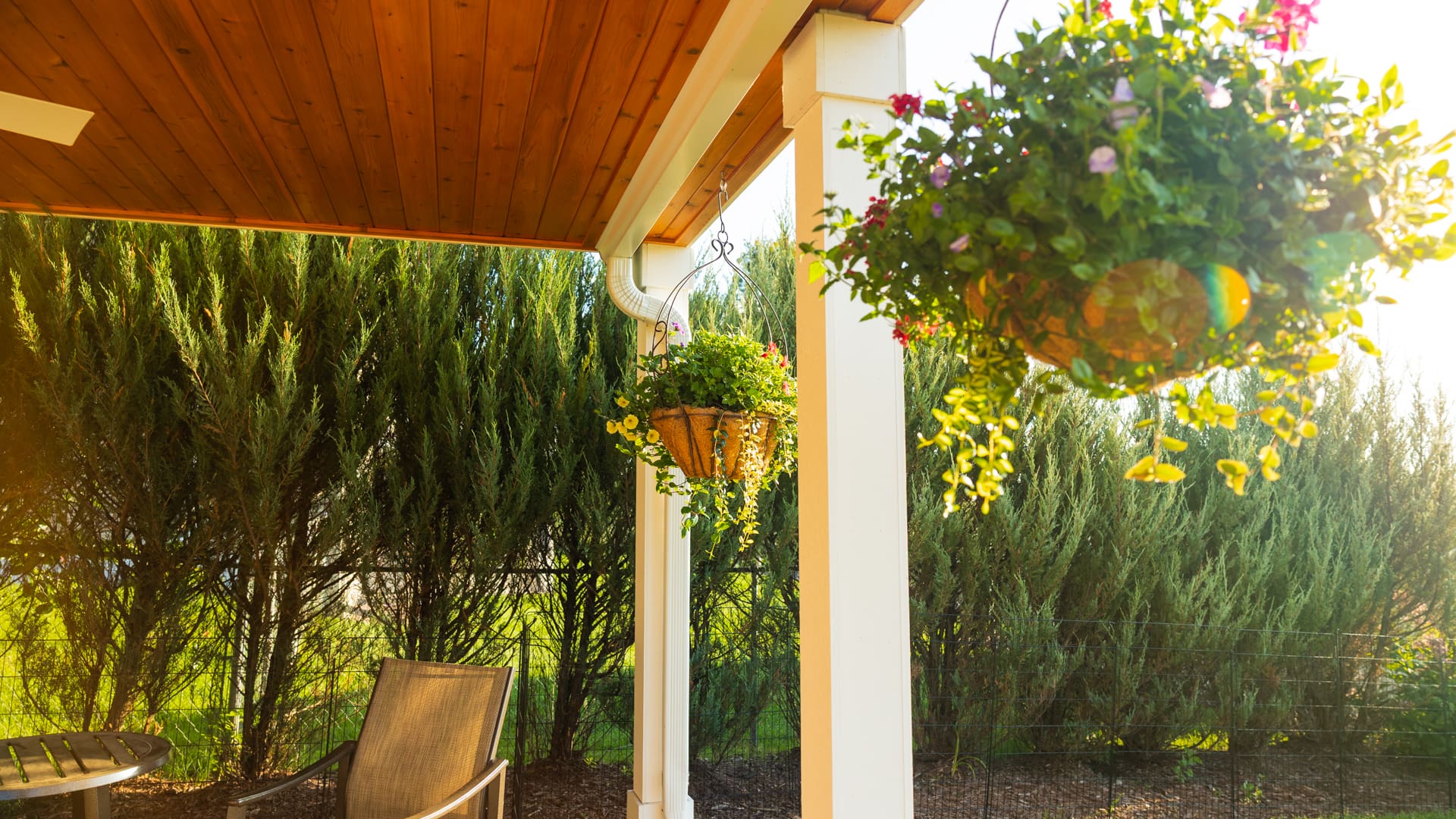
A fully covered deck — with a solid roof rather than open rafters — provides reliable shade and protection from summer rain. For homeowners who’ve put real money into a deck and want to use it through weather, a roofed structure changes the space considerably.
The trade-offs are significant: this is a structural project, not a weekend build. Any cover attached to your home needs to integrate with the existing structure, which typically requires engineering review and a permit. Snow load is a genuine concern in Minnesota — a roof that isn’t sized for winter accumulation is a problem waiting to happen. If you’re going this direction, get bids from contractors who know local code requirements and have built covered structures in the area before.
Privacy Screens and Rail-Mounted Shade
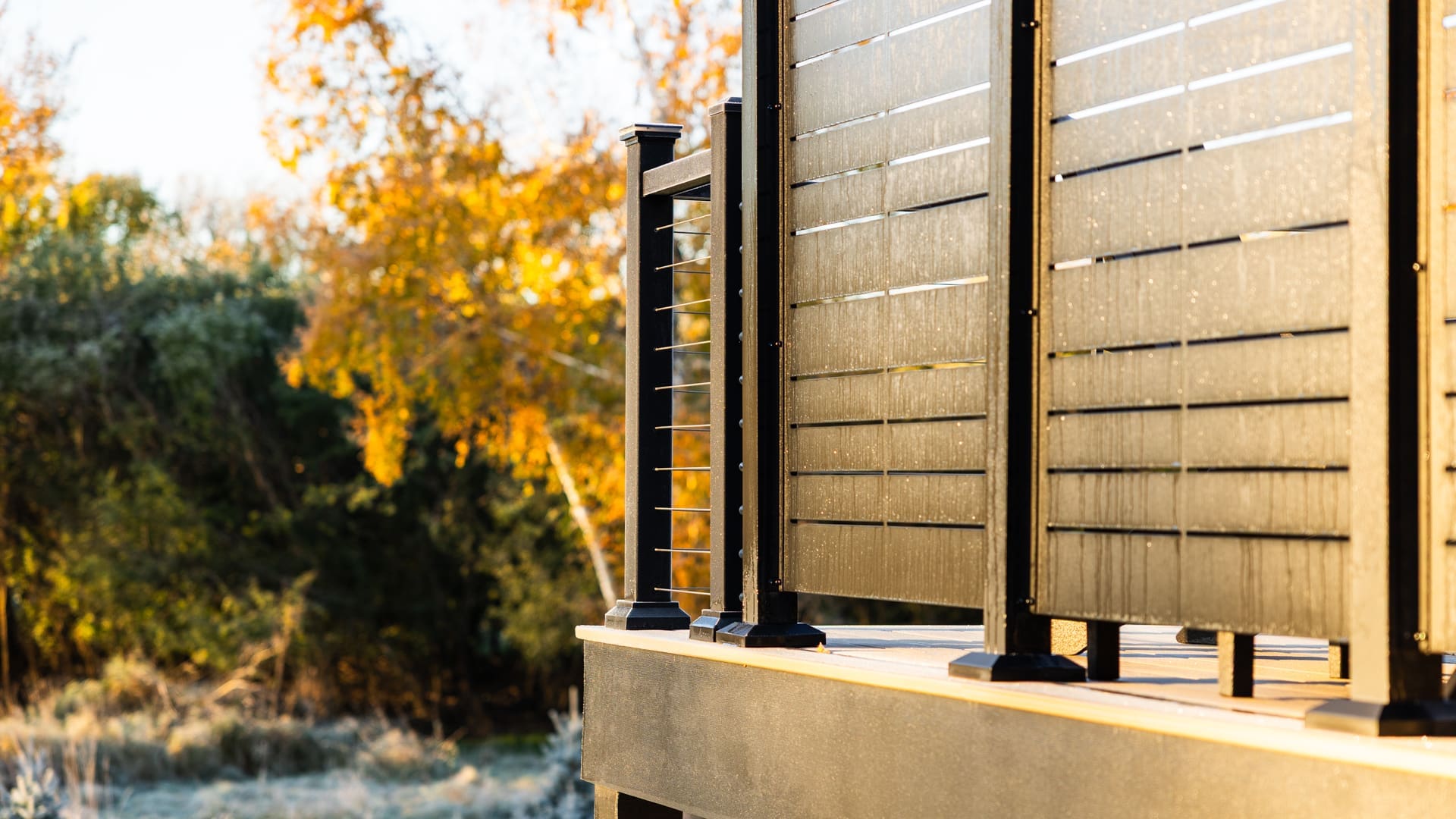
Rail-mounted shade panels, vertical screens, or lattice sections won’t replace overhead shade, but they can block afternoon sun coming in from a specific direction. On a west-facing deck, the late-day sun hits at a low angle — not from above, but almost horizontally. A screen or panel along the western rail edge can block that specific exposure more effectively than any overhead structure.
These are often the fastest semi-permanent option that doesn’t require a permit or structural work — but still check with your municipality if you’re attaching anything to the deck framing itself.
If you are looking for built-in shaded structures as part of an existing deck, or new deck construction, contact us and find out more about Voyager’s deck installation services.
How to Choose Shade Based on Sun, Wind, and Snow
Before committing to any shade option, work through three questions:
Where does the sun actually hit your deck, and when? A north-facing deck rarely needs shade. South- and west-facing decks get the strongest afternoon sun. Figure out the direction and the timing before you design around it — a structure that solves the wrong problem wastes money.
What’s the wind and storm exposure like? Minnesota summers bring fast-moving thunderstorms and gusts. Any temporary structure needs to be either stable enough to stay put or easy enough to take down quickly. Any permanent structure should be built to handle it.
What happens in winter? Even shade structures that seem lightweight can accumulate snow. Pergola rafters handle some load, but canvased structures or improperly designed covers can become a problem. If you’re installing something permanent, think through the winter scenario before finalizing.
Board color plays a role too. Lighter-colored composite decking tends to reflect more heat than darker boards. If you’re planning a new deck build or a replacement, deck design ideas that pair lighter boards with shade structures can add up to a meaningfully more comfortable space overall.
Questions to Ask Before Adding Permanent Shade
If you’re considering a pergola, covered deck, or any attached structure, work through these before you get bids:
- Does this project require a permit in my city or township?
- Is my existing deck structure built to support an attached shade structure?
- How will this integrate with my roofline, gutters, or siding?
- What’s the snow load rating of the proposed structure?
- Does my homeowner’s insurance need to know about this addition?
Some of these questions have clear local answers. Others depend on your specific home, your municipality, and your contractor. Checking with your city’s building department early avoids surprises during construction.
FAQ
What is the easiest way to add shade to my deck? A patio umbrella or shade sail is the quickest option — both can be set up without structural work and provide real coverage. The trade-off is that they’re temporary. Both need to come down for Minnesota winters, and umbrellas should be closed anytime a storm is approaching.
Is a pergola enough shade? It depends on your deck’s orientation and how much direct sun you’re dealing with. Open rafters provide partial shade and filter UV, but in peak afternoon sun on a west-facing deck, a pergola alone often isn’t enough. Many homeowners add a retractable canopy or shade cloth to get fuller coverage. Some find the pergola ideal as-is — it comes down to how your specific deck sits in the sun.
When does a shade project become structural? When you’re attaching a cover to your home or building a roofed structure, you’re in structural territory. That typically means permits, engineering review for snow load, and coordination with your home’s existing framing. A freestanding pergola is generally simpler but still check local requirements before you start.
What should I consider for a west-facing deck? West-facing decks catch late-day sun at a low angle — nearly horizontal by late afternoon. Overhead shade helps, but a rail-mounted screen or panel on the western edge can block that specific exposure more directly. Think about where the sun actually hits your deck, not just that it gets hot.
How should Minnesota snow and wind affect my deck shade plan? Any permanent structure needs to account for snow accumulation and wind. Get bids from contractors familiar with local code, and don’t assume a design built for a milder climate is appropriate for Minnesota winters. In our experience working on Twin Cities decks, this is one of the details that separates a well-built structure from one that creates problems down the road.
Make Your Deck A Bit Cooler This Summer
The right deck shade idea depends on your budget, your orientation, and how much you want to change the space. An umbrella or shade sail can buy real comfort this summer. A pergola or covered structure changes how you use the deck long-term — but each comes with trade-offs worth understanding before you commit.
If you’re thinking through a shade project or planning a new deck build with shade in mind, our team works with homeowners across the Twin Cities on decks that are comfortable, built to last, and ready for Minnesota weather.
Contact Voyager Exteriors to talk through your options.