Give Us a Call!
(612) 998-9500
Give Us a Call!
(612) 998-9500 




A storm passes through, and suddenly you’re wondering what happened to your roof. A careful roof inspection after a storm can help you spot problems early — before a small issue turns into water damage, mold, or a bigger repair bill. The good news: you can check most of what matters from the ground.
In This Article:
- Safety first: stay off the roof
- What to check from the ground
- What to check inside the home
- How hail and wind damage can look different
- How to document what you see
- When to call for a storm damage inspection
- FAQ
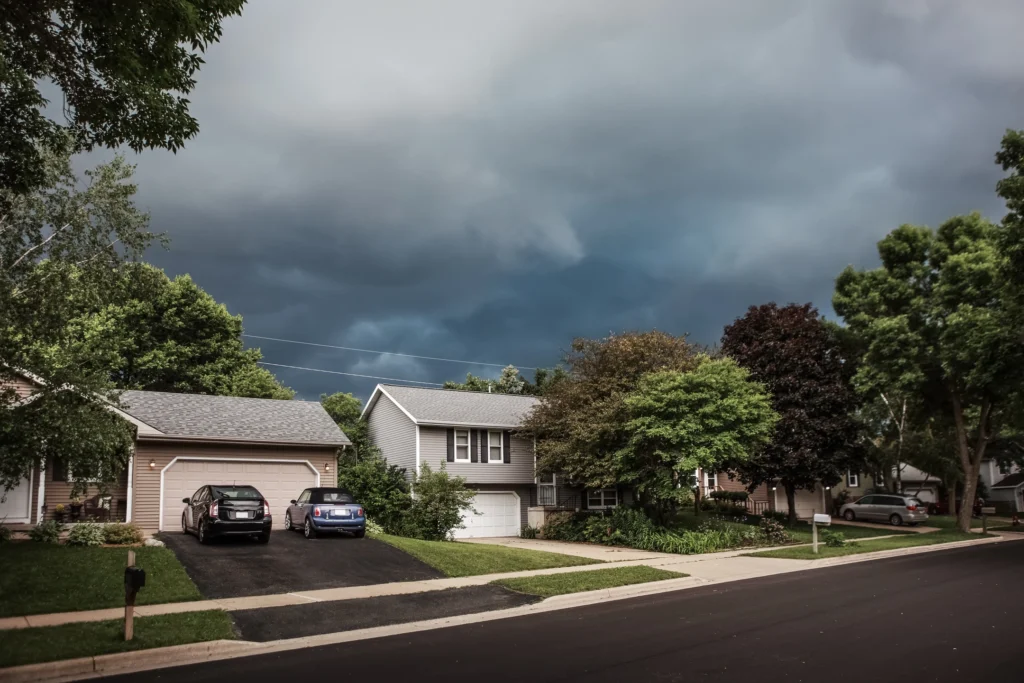
Safety First: Stay Off the Roof
The most important rule after any storm: keep your feet on the ground. Wet shingles, soft spots, or debris on your roof make it genuinely dangerous to climb — even for experienced roofers in the right gear. If a contractor shows up at your door right after a storm and encourages you to get up there with them, treat that as a red flag.
You can learn a surprising amount from ground level with a pair of binoculars or a smartphone camera with zoom. Save the close-up access for a licensed professional.
What to Check From the Ground
Start your storm damage inspection by walking the full perimeter of your home. You’re looking for visible changes — anything that wasn’t there before the storm.
Shingles, Vents, Flashing, and Roof Edges
Look for:
- Missing or lifted shingles — gaps or curled edges visible against the roofline
- Granule loss — asphalt shingles shed small granules when damaged; check gutters and the ground around downspouts for grit buildup
- Dented or bent vents — metal roof vents often show hail impacts as small dimples
- Damaged flashing — the metal strips around chimneys, skylights, and roof valleys can bend or separate in high winds
- Debris on the roof — branches or large debris may have shifted or displaced shingles on impact
Don’t assume every visible mark is a claim-worthy situation. Some granule loss is normal over a roof’s life. What you’re looking for is obvious new damage that wasn’t there before the storm.

Gutters, Downspouts, Siding, and Windows
Gutters and siding often show hail damage more clearly than the roof itself — they’re lower, easier to see, and made of materials that dent or crack visibly. Look for:
- Dented or cracked gutters and downspouts
- Pitting, chipping, or small circular marks on siding panels
- Cracked or broken window screens
- Chipped paint on window trim, doors, or fascia boards
What to Check Inside the Home
After walking the exterior, take a few minutes inside. Roof storm damage signs don’t always start on the outside.
- Ceiling stains — yellow or brown water spots, especially in upper-floor rooms or near exterior walls
- Attic dampness — if you have attic access, look for wet insulation, water marks on the sheathing, or any new daylight coming through
- New odors — a musty smell after a storm can indicate moisture getting where it shouldn’t
- Active dripping or spreading stains — a roof leak after storm events may not show up immediately; check again 24–48 hours after heavy rain
One note: interior water stains don’t always mean a new roof problem. An older slow leak, a plumbing issue, or condensation can cause similar marks. Document what you see and let a professional trace the source.
How Hail and Wind Damage Can Look Different
Hail damage on a roof typically shows up as soft spots or bruising on asphalt shingles — the granule surface cracks and the mat underneath gets compressed. From the ground, you may not see this directly, but dented gutters, chipped trim paint, or dimpled metal vents nearby often indicate that the same hail event reached your roof.
Wind damage roof situations look different: shingles may be missing entirely, partially lifted at the edges, or creased from debris impact. Flashing around penetrations is also vulnerable in high winds.
Neither hail marks nor missing shingles automatically mean your roof needs full replacement. That determination takes a professional inspection and a closer look at the shingle mat condition — not just the surface.
IBHS hail guidance for homeowners
How to Document What You See
Good documentation helps you whether you end up filing an insurance claim or simply scheduling a contractor evaluation.
- Photograph everything — date-stamped photos from multiple angles around the property
- Record the storm date and time — check the NWS Twin Cities storm reports to confirm whether hail or high winds were reported in your area
- Note specific locations — even a simple note like “missing shingle on the southwest corner, granule pile at the north downspout” gives an adjuster or contractor a useful starting point
- Compare to before-storm photos — if you have any from a previous inspection or listing photos, they can show what’s changed
The Minnesota Department of Commerce advises homeowners to document damage carefully before making repairs, and to work with licensed contractors rather than unsolicited door-to-door offers after a major storm event.
Minnesota Commerce Disaster Information Center
When to Call for a Storm Damage Inspection
A professional inspection makes sense when:
- You spot visible damage from the ground — missing shingles, dented vents, significant granule piles
- Interior water stains or attic dampness appeared after the storm
- Your area received confirmed hail or high winds per an NWS report
- You’re planning to file an insurance claim and want documentation before an adjuster visit
- It’s been several years since your last professional roof evaluation
In our experience working on homes across the Twin Cities, post-storm calls often reveal damage that wasn’t visible from the ground — and occasional situations where what looked alarming turned out to be pre-existing wear. Either way, knowing what you’re dealing with is better than guessing.
The Minnesota Department of Commerce recommends verifying a contractor’s license through the state before signing any storm repair agreement. You can look up licensure at mn.gov/commerce.
Learn about our roofing services
Frequently Asked Questions
Can I inspect my own roof after a storm? You can do a lot from the ground — and that’s exactly where you should stay. Walk the perimeter, use binoculars or your phone’s zoom, and look at gutters, siding, and window trim for visible hail or wind marks. Leave the up-close work to a licensed roofer.
What are the roof storm damage signs I should look for? The most common signs include missing or lifted shingles, granule buildup in gutters or at downspout bases, dented metal vents, separated flashing, and water stains on interior ceilings. Hail often shows up on gutters and siding before it’s visible on the roof itself.
When should I contact my insurance company after a storm? Reach out to your insurer when you observe visible damage, when interior water intrusion appears, or when NWS reports confirm hail or high winds in your area. A contractor can help document conditions before an adjuster visit. Most policies have reporting timelines for storm-related damage — check your policy or call your agent to confirm yours.
Take the Guesswork Out of It
After a storm, the most useful thing you can do is take a careful look from the ground, document what you see, and get a professional set of eyes on anything that concerns you. Visible damage may or may not require repair — but you won’t know until someone qualified takes a closer look.
Contact Voyager Exteriors to talk through your options.