Give Us a Call!
(612) 998-9500
Give Us a Call!
(612) 998-9500 




After a summer storm rolls through, it’s easy to walk your property and notice things you hadn’t before. Siding around windows and doors is one of the first places homeowners spot something worth a closer look — a gap where there wasn’t one, a bit of staining along the trim, or caulk that seems to have pulled away from the frame. Most of these signs deserve attention, but they don’t all mean the same thing.
In This Article:
- Why windows and doors are key siding transition points
- Signs to watch for after rain
- Caulk maintenance vs. deeper water-control issues
- How siding, trim, flashing, and weather barriers work together
- When to ask for a professional evaluation
Why Windows and Doors Are Key Siding Transition Points
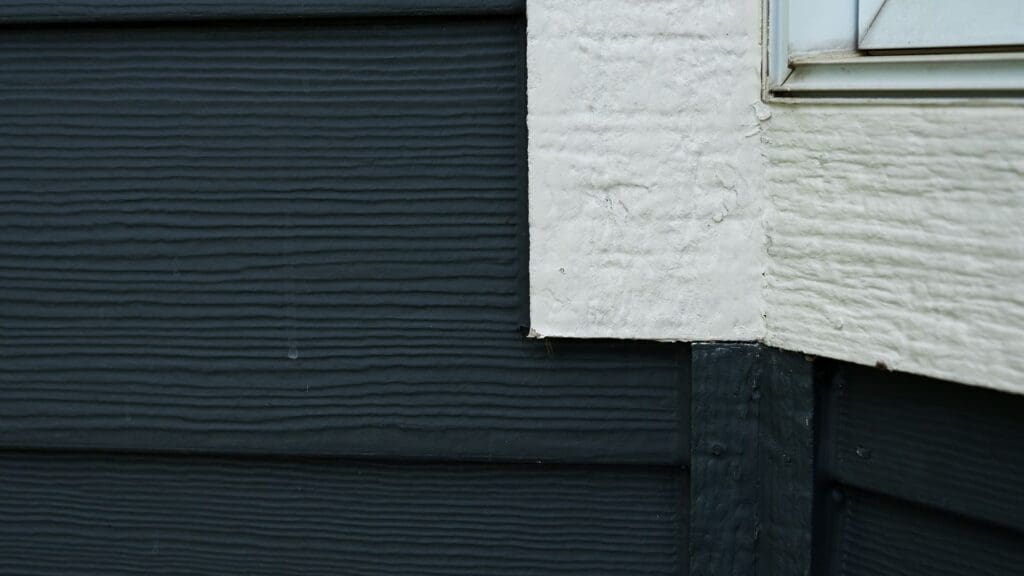
Your home’s exterior siding works as a system. Overlapping panels, flashing, and a water-resistive barrier — a layer of moisture-blocking material installed behind the siding — all work together to direct water down and away from the structure. Windows and doors interrupt that system. Every opening is a place where siding stops and something else begins, and that transition has to be carefully detailed to keep water moving in the right direction.
In Minnesota, where summer storms bring wind-driven rain and significant humidity swings, these openings see real stress. The gaps that develop over time aren’t always cosmetic — they can become paths where water finds its way inward if the transition wasn’t well-built or has worn down.
That doesn’t mean every gap signals a crisis. It means openings around windows and doors are worth watching, especially after heavy weather.
Signs Homeowners May Notice After Rain
Most of what you can check yourself is surface-level — and that’s still useful. It tells you where to focus and what to document before calling someone in.
Gaps or Cracked Caulk
Caulk seals the seam between siding trim and a window or door frame. Over time, UV exposure, heat, and Minnesota’s freeze-thaw cycles break it down. When you see gaps in the caulk line — or places where it has pulled away, cracked, or gone brittle — water has a direct path into the joint. Siding gaps around windows tend to start small and widen gradually, which is part of why they’re easy to miss until a storm makes them obvious.

Stains, Soft Trim, or Peeling Paint
Dark streaks running down from a window corner, soft or spongy wood trim, or paint that’s bubbling and peeling are signs that moisture has been sitting somewhere it shouldn’t. These can point to a surface drainage issue or something underneath. It’s hard to tell from a walk-around alone — homeowners we work with often describe it the same way: “It looked fine for years, then the storm made it visible.”
Interior Water Marks Near Openings
If you’re seeing water stains on a wall or ceiling near a window or door after a storm, that’s worth documenting. It doesn’t automatically mean siding is the source — windows, roofing, and flashing can all be factors — but it’s a sign to investigate rather than wait out.
Caulk Maintenance vs. Deeper Water-Control Issues
Caulk is the part homeowners can usually handle themselves. If the caulk around your window and door frames has cracked or pulled away, a fresh bead of exterior-grade caulk is a reasonable maintenance step. The Department of Energy notes that sealing gaps around windows and doors is one of the more effective ways to reduce air leaks and lower heating and cooling costs. Air sealing your home → View Energy Air Sealing Your Home
What caulk can’t fix is a problem behind the surface. Flashing — thin metal or membrane material installed at the top and sides of window and door openings — is what directs water away from the rough opening before it reaches the siding. If flashing was installed incorrectly, is missing, or has failed, recaulking the surface won’t stop water from working in underneath it.
The water-resistive barrier behind the siding adds another layer of protection. In Minnesota, re-siding projects are required to follow manufacturer instructions and applicable state residential code requirements for these layers. MN requirement for weather-resistive barrier during re-siding — View Mn Fs Re Siding PDF
The practical takeaway: fresh caulk is routine maintenance. Recurring water marks, soft trim, or interior moisture are signs that the issue may run deeper.
How Siding, Trim, Flashing, and Weather Barriers Work Together
Think of your home’s exterior as a layered system, not a single shell. From outside in:
- Siding sheds the bulk of the water
- Siding trim around windows covers the gap between the panel edge and the window or door frame
- Flashing redirects water that gets past the trim away from the opening
- Weather-resistive barrier catches anything that makes it further in and routes it back out
When each layer does its job, water moves down and away without pooling or penetrating. When one layer fails — or was skipped during installation — the others have to compensate. Over time, that shows up as the staining, soft spots, and exterior water leaks that homeowners notice after a storm.
Our crews regularly see this pattern on homes where the siding itself is in decent shape, but the transitions around windows and doors weren’t detailed carefully during the original installation or a past re-siding project.
When to Ask for a Professional Evaluation
Not every gap or stain calls for immediate action. A few situations are worth getting eyes on sooner rather than later:
- Caulk that keeps failing in the same spot after you’ve replaced it
- Soft, discolored, or spongy trim that doesn’t dry out between rain events
- Interior moisture near windows or doors that appeared after a storm
- Siding that’s more than 15–20 years old with no recent inspection
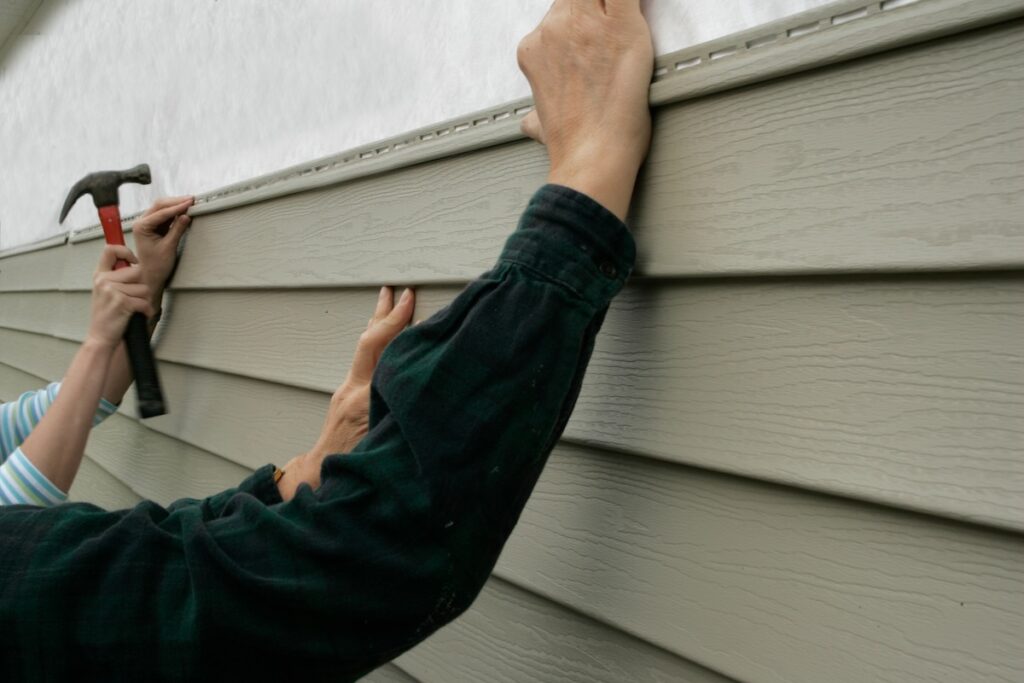
A contractor can tell you whether what you’re seeing is normal surface wear or a sign of something that needs repair. If you’re already planning a siding project, that’s a natural time to evaluate how the window and door transitions are being handled — whether the existing flashing is in good shape or whether it should be replaced as part of the work.
Contact a professional at Voyager Exteriors.
Frequently Asked Questions
Are gaps in siding around windows and doors normal? Some movement and minor gaps are expected over time, especially in climates with real seasonal swings. The question is whether the gap is in the caulk line — a maintenance item — or in the layers behind the surface. When in doubt, document what you see after a storm and have a contractor take a look before the next one.
When is caulk enough to fix exterior water leaks near windows? If caulk has simply dried out or cracked with age and there’s no sign of moisture damage behind the surface, fresh exterior-grade caulk is a reasonable fix. If you’re seeing staining, soft wood trim, or interior water marks, caulk alone won’t address the underlying issue.
What is flashing, and why does it matter? Flashing is a thin layer of metal or membrane installed at transitions — the top of a window opening, the edge of a door frame, the joint between a wall and a roof. Its job is to direct water away from those openings before it can work into the structure. Properly installed flashing is one of the details that determines how well siding holds up around windows and doors over the long run.
Should I be concerned about water marks near a window after a storm? Interior water marks are worth taking seriously, but they’re not always a siding problem. Roofing, window seals, and flashing can each be a factor. Document the location, note when it appeared, and have a contractor evaluate it. Diagnosing the source from the inside isn’t reliable without a closer look at the exterior.
What to Do After a Summer Storm
Siding around windows and doors takes more stress than most of the wall in between — every opening is a transition point that has to stay tight through heat, cold, and wind-driven rain. Most of what you’ll see after a Minnesota summer storm is surface-level. Some of it will point to something worth addressing.
If you’re seeing signs you’re not sure about, our team is glad to take a look and talk through your options. Contact Voyager Exteriors to request a project consultation — no pressure, just a practical conversation about what’s there and what, if anything, makes sense to do about it.