Give Us a Call!
(612) 998-9500
Give Us a Call!
(612) 998-9500 

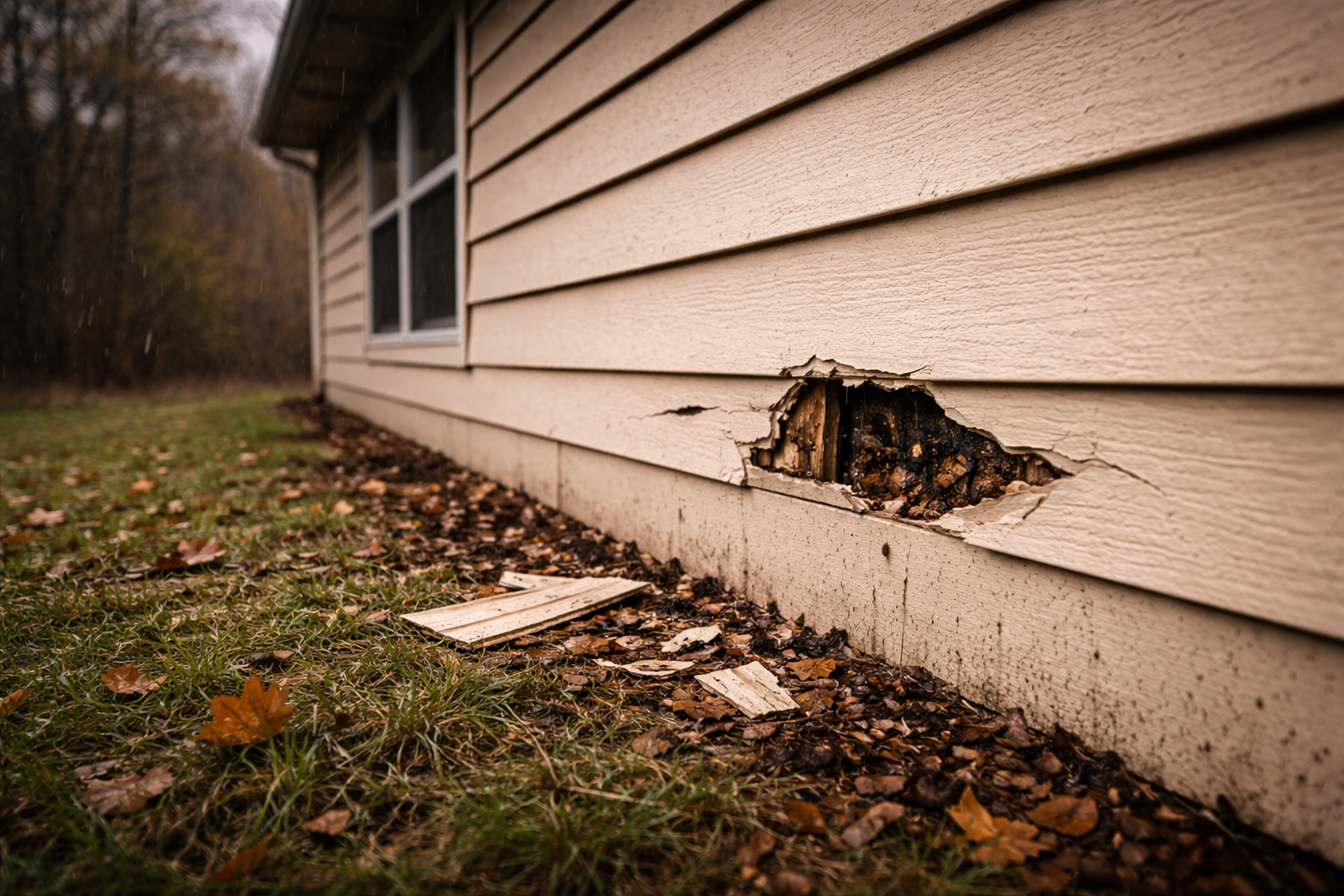


Every Twin Cities homeowner faces this question eventually — do I need siding repair, or is it time for something more?
It’s one of the most common questions we get. Siding repair vs. replacement isn’t always an obvious call, and like most exterior decisions in Minnesota, the honest answer depends on your material, your home’s condition, and how much punishment years of Minnesota winters, hailstorms, and relentless freeze-thaw cycles have dealt to your exterior. The key is knowing when a targeted repair is the smart move — and when calling an expert saves you time, money, and a lot of headaches down the road.
- Prevention — Catching siding damage early stops small problems from becoming costly structural and moisture issues.
- Expertise — A local contractor who knows Minnesota homes can identify and address hidden damage that’s easy to miss.
- Value — The right repair or replacement decision protects your investment and keeps your home performing for decades.
After years of siding work across the Twin Cities, we’ve answered this question hundreds of times. Our goal is simple: utilize our expertise and experience give you clear, accurate information so you can make the right call for your home.
Why Minnesota Is Especially Hard on Siding
Twin Cities homeowners expect winter to be tough on their home’s exterior — what surprises them is everything else. Your siding battles the entire Minnesota calendar, and the damage goes well beyond cold:
- Freeze-thaw cycles — Water enters tiny cracks, freezes, expands, and widens those gaps a little more with every cycle. Do that hundreds of times over a decade, and a hairline crack becomes a real problem.
- Heavy snow load — Extended moisture exposure keeps siding damp for weeks, especially near decks and grade level.
- Ice dams — When heat escapes through an under-insulated attic, meltwater backs up under shingles and can force water behind the siding. If your issues track along the roofline, ice dams may be part of the story.
- Summer humidity — Materials that absorb moisture swell in summer and shrink in winter. Poor installation that doesn’t account for that movement leads to buckling and seam failures.
- Hail and windstorms — Minnesota sees its share of severe weather, and some materials handle impact far better than others.
All of this shapes the siding repair vs. replacement conversation — because what works in a mild climate often fails here.
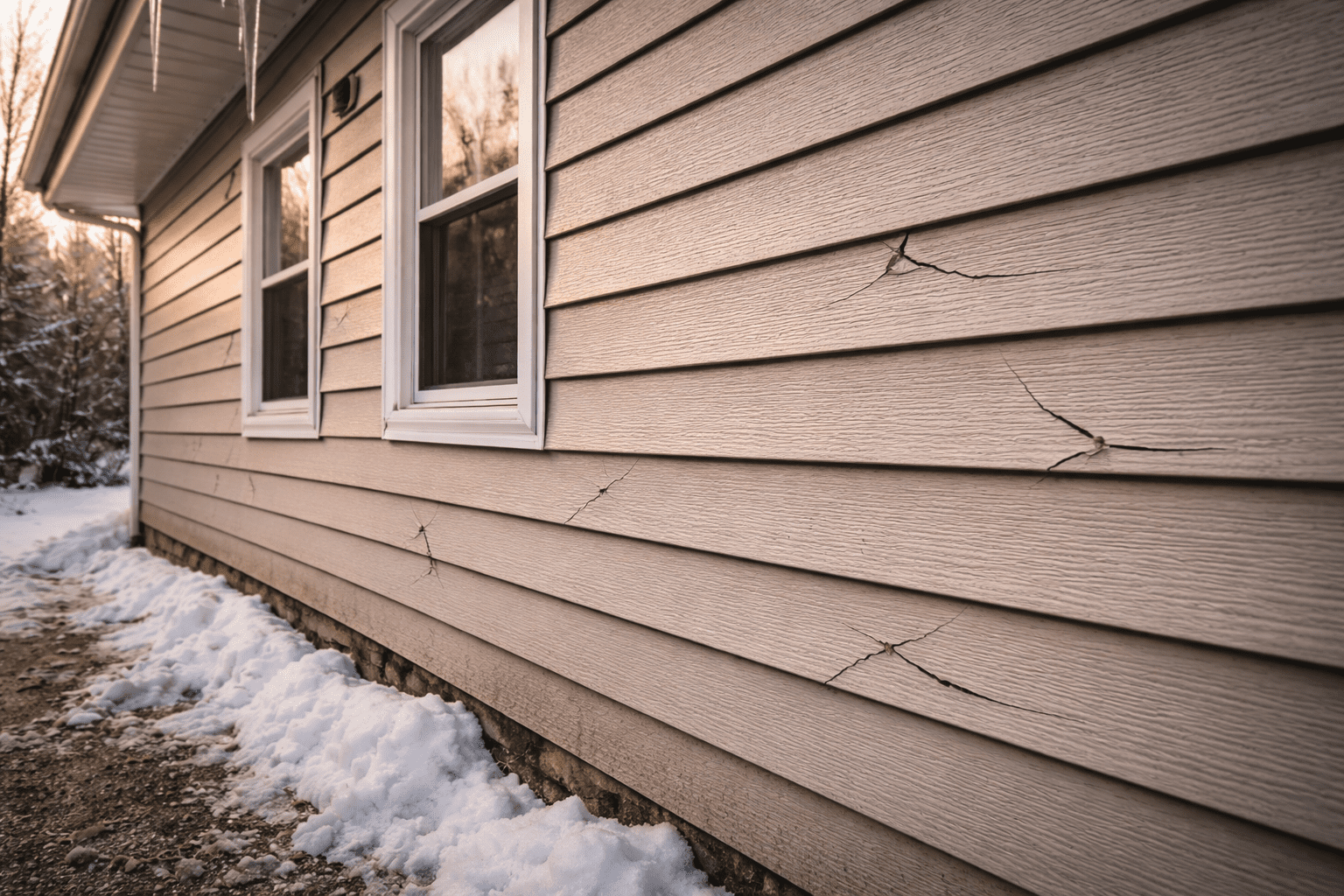
Common Siding Materials in Minnesota — and the Problems They Develop
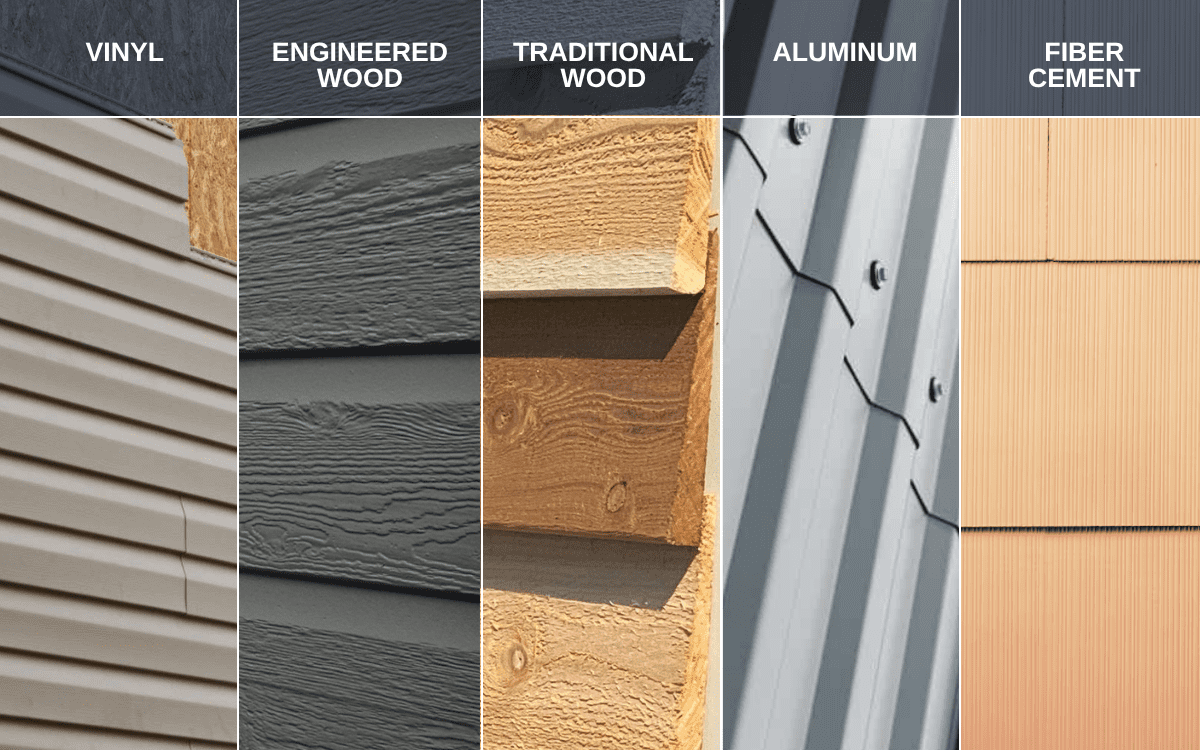
Understanding your current material is the first step in any siding repair vs. replacement decision. Each material performs differently in our climate, and each has its own failure patterns.
Vinyl Siding
The most common material in the Twin Cities area. Affordable and low-maintenance, but Minnesota’s subzero temps make it brittle and shorten its overall lifespan.

Common issues:
- Cracking from impact — Cold weather makes vinyl far more susceptible to hail and wind-blown debris damage.
- Warping — Vinyl expands and contracts significantly; if it was nailed too tightly, it buckles over time.
- UV fading — Especially noticeable on darker colors after several years of strong summer sun.
- Color matching difficulty — Faded older panels rarely match new replacement pieces well, making spot repairs look patchy.
Engineered Wood Siding
Designed to look like real wood with added durability. Performs well when properly installed and maintained.
Common issues:
- Moisture intrusion at seams — Snow-heavy winters keep lower edge areas damp for extended periods.
- Edge deterioration — Areas near decks and grade are especially vulnerable.
- Delamination — Repeated moisture exposure can cause some products to separate in layers over time.
Cedar and Traditional Wood Siding
Beautiful and long-lasting — but only with consistent, diligent maintenance. Repainting or restaining every few years isn’t optional; it’s what keeps moisture out.
Common issues:
- Rot near the base — Spring melt can keep lower sections wet for weeks.
- Pest vulnerability — Woodpeckers and insects are real concerns, particularly in wooded neighborhoods.
- High maintenance demands — Neglect accelerates failure significantly.
Aluminum Siding
Less common today, but still found on many older Twin Cities homes.
Common issues:
- Denting from hail — Minnesota’s storm seasons can leave visible damage across an entire elevation.
- Chalking and oxidation — Paint degrades into a powdery residue over time.
- Difficult finish matching — Matching aged aluminum finishes for repairs is genuinely challenging.
Fiber Cement and Engineered Wood Siding (Including James Hardie and LP SmartSide)
The strongest performers in Minnesota conditions — when installed correctly. The most common problems we see with these products trace back to installation, not the material itself.
Installation-related issues to watch for:
- Improper clearance from grade or rooflines.
- Missing or incorrect flashing around windows and doors.
- Poorly caulked joints that fail during freeze-thaw cycles.
Signs Your Siding Needs Attention
Before landing on siding repair vs. replacement, it helps to know what you’re actually looking at. Walk around your home every few months and after major storms — early siding damage is far less expensive to address than damage that’s been left through a Minnesota winter. Here’s what to watch for:
- Cracks or holes — Even small ones can let moisture penetrate and weaken structural components.
- Warping or buckling — Often indicates heat exposure, moisture issues, or installation problems.
- Soft or spongy spots — A strong sign of underlying rot or moisture infiltration behind the wall.
- Bubbling or blistering paint — Suggests moisture is trapped beneath the surface.
- Seams pulling apart — Sealant failure that allows water in.
- Interior drywall staining near exterior walls — Water has likely already moved past the siding.
- Persistent drafts or rising energy bills — Your wall assembly may no longer be performing as it should.
If you’re unsure whether what you’re seeing is cosmetic or structural, a professional siding inspection is the right next step. Visit our siding services page
DIY vs. Hiring a Local Siding Contractor: Knowing the Difference
Some siding issues are genuinely manageable for a handy homeowner. Others require professional tools, training, and judgment — and misreading which is which can make the problem worse or void your warranty.
When minor DIY maintenance is reasonable:
- Small cosmetic chips or hairline cracks in vinyl can sometimes be filled with color-matched caulk.
- A single loose panel that has slipped out of place may snap back into position.
- Routine cleaning — removing mildew or debris with a soft brush and garden hose — is always a good idea.
When to call a professional:
- Multiple cracks, holes, or panels showing widespread wear.
- Any soft spots, mold odors, or interior staining that suggest moisture behind the wall.
- Warped or buckled panels — these typically indicate a systemic installation or moisture issue, not just surface damage.
- Rot or pest damage that may have spread to framing or insulation.
- Storm or hail damage where an insurance claim may be involved — a licensed contractor can document damage properly and ensure repairs meet code, which matters for claim approval.
The general rule: if the damage is isolated and clearly surface-level, a careful DIY fix may hold. If there’s any question about what’s behind the wall, bring in someone who can look at the full picture. If you’re searching for a siding contractor near you in the Twin Cities, look for someone with hands-on experience and certification with a siding manufacturers like James Hardie or LP SmartSide— not just general exterior experience. An experienced contractor will know when to replace siding in Minnesota.
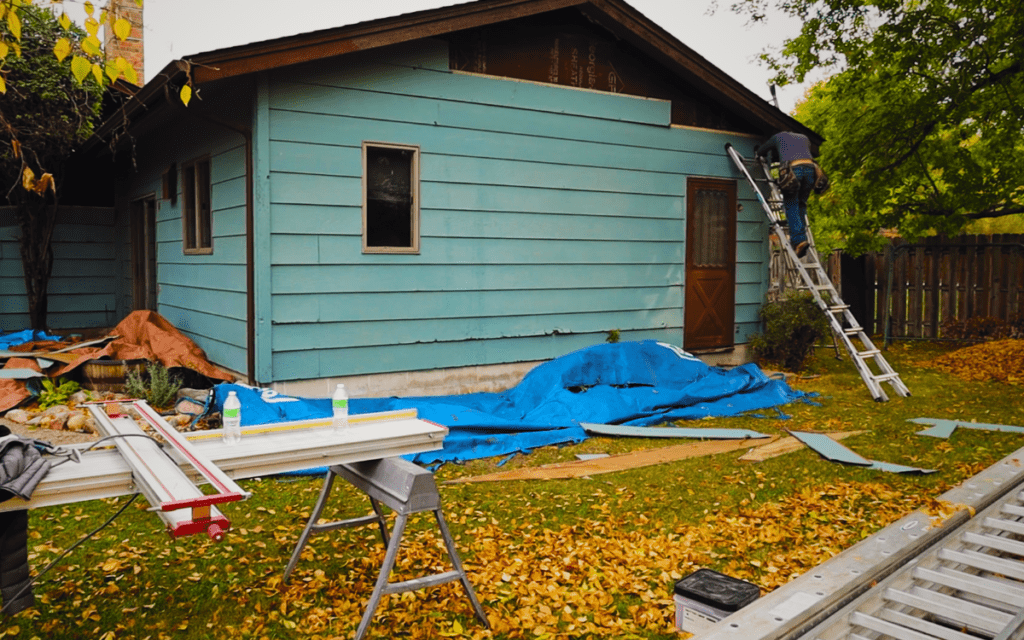
Siding Repair vs. Replacement: When Repairs Make Sense
Targeted siding damage repair is often the right call and can meaningfully extend the life of a siding system that still has good years left in it.
Repairs are generally the right move when:
- Damage is localized — A handful of cracked panels, isolated hail hits, or one section of rot. If the rest of the siding is structurally sound, spot repairs can restore performance without replacing the whole system.
- The siding is relatively young — Under 10–15 years old and otherwise performing well? Repairs are almost always the cost-effective choice.
- There’s no moisture behind the wall — Surface damage is one thing. If water has gotten into the sheathing or framing, that changes the conversation entirely.
- Insurance is covering storm damage — After a hail or wind event, your insurer may cover panel replacement. Repairs can restore function, though color matching on weathered siding can be tricky.
Siding Repair vs. Replacement: When Replacement Is the Better Investment
Sometimes the most honest thing we can tell a homeowner is that repair after repair is just delaying the inevitable — and adding up in cost along the way.
Replacement makes more sense when:
- Damage is widespread — Multiple areas showing rot, swelling, or failing sections. The material is likely near end-of-life.
- The siding is aging out — General lifespans to keep in mind:
- Vinyl: 20–30 years
- Cedar/wood: 20–40 years with consistent maintenance
- Aluminum: 30–40 years
- Fiber cement: 30–50+ years
- Moisture has gotten inside the wall — Look for soft or spongy panels, interior drywall staining near exterior walls, mold or mildew odors, or warped framing. These signs mean water has already moved past the siding. A repair alone won’t fix that.
- Energy efficiency is suffering — Older siding systems often lack a proper house wrap and continuous insulation. Full replacement is an opportunity to upgrade the entire wall assembly — adding a weather-resistive barrier and continuous exterior insulation that reduces thermal bridging through framing studs and can meaningfully lower heating and cooling costs.
- You’re planning to sell — New siding improves curb appeal, increases buyer confidence, and reduces concerns that come up during home inspections.
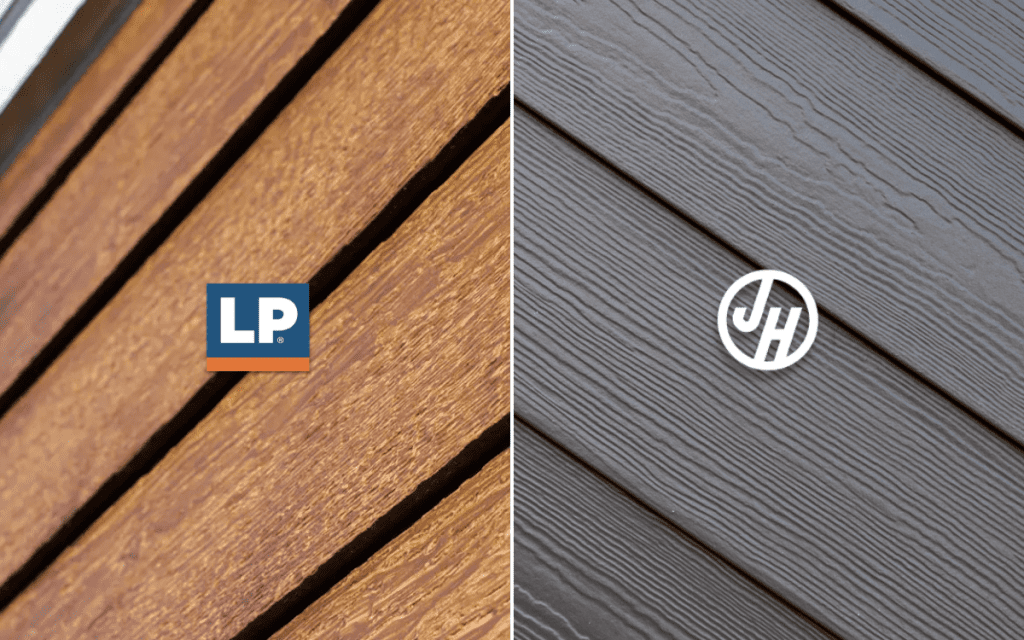
Why James Hardie and LP SmartSide Are the Go-To Choices for Minnesota
When replacement wins the siding repair vs. replacement decision, material selection matters — especially in Minnesota. Both James Hardie fiber cement and LP SmartSide engineered wood have become the standard recommendations for Twin Cities homes, and for good reason.
James Hardie Fiber Cement
James Hardie manufactures climate-specific formulations designed to resist the cracking and dimensional movement that cold winters cause in vinyl and wood. Fiber cement is made from Portland cement, sand, and cellulose fibers — a composition that delivers strength and dimensional stability across extreme temperature swings.
What makes it well-suited for our climate:
- Moisture and rot resistance — Unlike wood, fiber cement doesn’t swell, rot, or degrade from moisture exposure — a meaningful advantage where siding near grade, decks, and eaves faces prolonged seasonal moisture. Critical caveat: proper clearances of at least 6 inches above soil grade are required for this to work as intended.
- Impact resistance — Holds up significantly better than vinyl under hail and wind-driven debris. James Hardie products earn high impact ratings in testing, and in some cases this can affect homeowner’s insurance premiums — worth asking your provider about.
- ColorPlus® Technology factory finishes — A baked-on factory finish applied under controlled conditions. More consistent color, better adhesion, greater fade resistance, and longer repainting intervals than field-painted alternatives.
- Non-combustible — Fiber cement doesn’t ignite when exposed to direct flame, making it more fire-resistant than wood or vinyl.
- Low ongoing maintenance — Longer repainting intervals and no need for periodic staining means fewer recurring costs over the life of the home.
Explore James Hardie products and options.
LP SmartSide Engineered Wood
LP SmartSide is an engineered wood product treated with a proprietary SmartGuard® process that provides resistance to moisture, fungal decay, and impact damage. It offers the warmth and texture of real wood with performance characteristics better suited to Minnesota’s climate than traditional cedar.
What makes it well-suited for our climate:
- Impact and dent resistance — LP SmartSide consistently outperforms vinyl and traditional wood in impact testing, making it a strong choice in hail-prone areas.
- Moisture and fungal resistance — The SmartGuard® treatment process helps resist the moisture intrusion and decay that challenge traditional wood siding in cold, wet conditions.
- Paint-ready surface — LP SmartSide takes and holds paint exceptionally well, and factory-primed options are available for a more consistent finish. See some LP Color Options.
- Dimensional stability — Engineered to minimize the swelling and shrinking that causes problems with natural wood in freeze-thaw climates.
Both products are available through Voyager Exteriors and installed to manufacturer specifications by our experienced team. The right choice between them often comes down to your home’s style, your maintenance preferences, and your budget — something we’re happy to walk through with you.
Installation Best Practices — Where Premium Materials Meet Long-Term Performance
The majority of siding problems we see — across all materials — trace back to installation rather than the material itself. In Minnesota’s climate, cutting corners on installation details shows up fast.
The details that matter most:
- Proper flashing around all openings — Flashing around windows, doors, and wall penetrations directs water away from vulnerable seams. Missing or improperly installed flashing is one of the most common causes of water intrusion behind siding. It’s not visible once the job is done, but it’s one of the most important parts of the work.
- Correct clearances from grade and rooflines — At least 6 inches of clearance above soil and proper spacing above roofing and decking surfaces. Direct contact with standing moisture leads to wicking — and moisture wicking compromises even high-performance materials over time.
- A quality weather-resistive barrier — House wrap installed over the sheathing behind the siding acts as a secondary line of defense if water gets past the cladding. A properly installed house wrap blocks bulk water while allowing vapor to escape from the wall cavity — managing both moisture risks.
- Manufacturer-specified fastening — The right fastener type, correct spacing, and correct depth. Over-driven nails crack panels; under-driven fasteners leave gaps that allow movement and moisture intrusion.
- Quality caulk at joints and transitions — Sealant needs to be flexible and rated for exterior use in cold climates. Cheap caulk shrinks and cracks during freeze-thaw cycles. Quality sealant, properly applied and maintained, is a small investment that pays long-term dividends.
Why Choose a Certified Local Siding Contractor in the Twin Cities
Not all siding contractors are created equal — and in Minnesota’s climate, the difference between a quality installation and a rushed one shows up within a few seasons.
A certified local contractor brings three things that matter:
- Climate knowledge — A contractor who has worked on hundreds of Twin Cities homes understands how our freeze-thaw cycles, ice dams, and hail seasons affect different materials. That experience informs every siding repair vs. replacement recommendation we make.
- Manufacturer certification — As a certified James Hardie installer, Voyager Exteriors is trained to install their products to exact specifications, which protects your manufacturer warranty and ensures the material performs as intended. Our team brings the same attention to detail and manufacturer standards to every LP SmartSide installation.
- Accountability — A local contractor has a reputation to protect in your community. They’re not a call center — they’re your neighbor, and they stand behind their work.
- 10 Year Limited Warranty — Voyager Exteriors, based in Centerville MN, offers a limited 10 year warranty on top of manufacturer warranties, giving homeowners an extra layer of flexibility and confidence.
When you’re searching for a siding contractor near you in the Twin Cities, certification and local experience aren’t just nice to have. In this climate, they’re what separates a siding system that performs for decades from one that starts showing problems in a few years.
Cost Considerations: Siding Repair vs. Replacement
Repairs cost less upfront. Minor siding damage repairs — replacing a few panels, patching rot, resealing around a window — typically range from $500 to $1800. When the repair genuinely makes sense, it’s often the right financial move in the short term. Always keep in mind the cost will depend on the age and quality of the materials and home. Always, speak with a contractor to assess the current real market costs for a repair.
The catch: repair costs add up. Patching one area this year and another next year means paying repeatedly without getting the long-term protection of a new system. And if a repair reveals hidden moisture damage behind the wall, the scope expands quickly beyond the average homeowner repair knowlege.
Replacement is a larger investment, but it buys long-term protection. Fiber cement and engineered wood products cost more than vinyl upfront, but they perform longer in our climate — which affects how often you’ll deal with repairs, repainting, and replacement cycles over the life of the home. If you’re within 5–10 years of the point where replacement becomes necessary anyway, the math often favors doing it now rather than continuing to repair a system nearing the end of its service life.
Voyager Exteriors is a local exteriors contractor with over 200+ five star Google reviews. We help homeowners address whether siding repair vs replacement is best for their home. Visit our siding services page
Voyager Exteriors is a Preferred and certified installer of James Hardie products. This means we can offer a stronger warranties on our work based on the highest installation standards in Minnesota. Explore James Hardie Products
What to Expect During a Full Siding Replacement
If replacement wins your siding repair vs. replacement decision, here’s a straightforward look at the process:
- Removal of existing siding — Exposes the sheathing and framing beneath for inspection before anything new goes on.
- Inspection for hidden damage — Rot, soft spots, and moisture-damaged areas are identified and repaired. This step can occasionally expand scope, but it’s far better to address hidden damage now than to seal it behind new siding.
- Installation of house wrap and flashing — The step that sets up long-term performance. A quality weather-resistive barrier over the sheathing, flashing around every opening and penetration. Non-negotiable in a Minnesota climate.
- Siding installation — Installed per manufacturer specifications with correct clearances, fastening, and spacing.
- Final sealing, caulking, and trim — Sealant at all joints and transitions, trim installation, and a final walkthrough to confirm everything is tight and weather-ready.
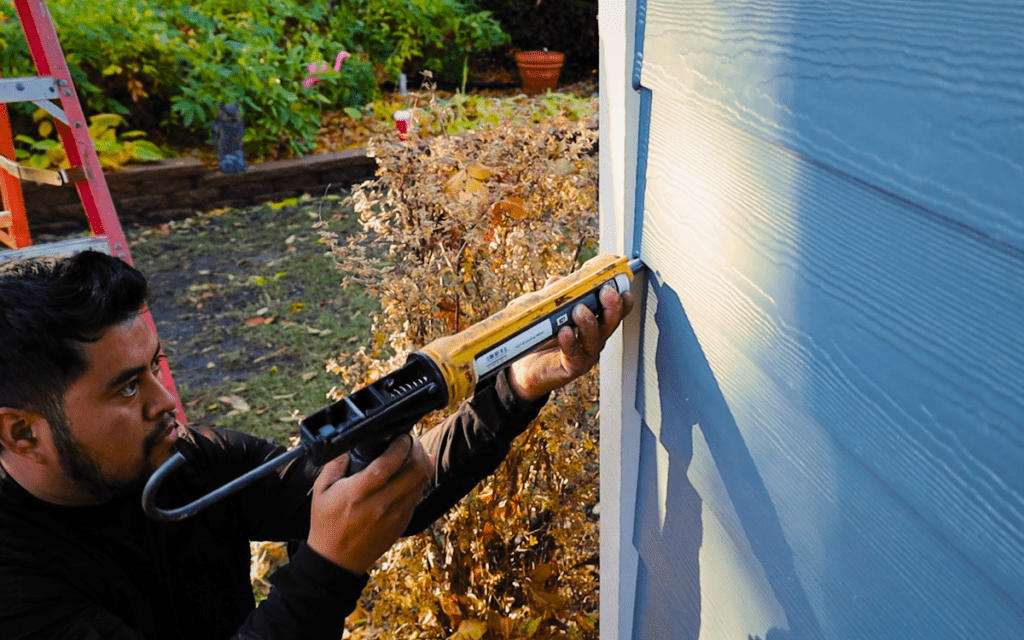
A properly installed fiber cement or engineered wood system, with all the details done right, can protect a Twin Cities home for 30–50 years or more.
Frequently Asked Questions
How do I know if my siding needs repair or full replacement? If the siding damage is localized — a few cracked panels, a small section of rot — repairs may be all you need. In the siding repair vs. replacement decision, widespread fading, rot, or signs of moisture behind the wall usually mean replacement is the more cost-effective and longer-lasting option. When in doubt, a professional inspection will give you a clear answer.
Can I delay siding repairs until spring or summer? It’s best not to wait. Even small cracks allow water and cold air into your walls during winter, and that damage compounds over time. Siding damage repair can be performed year-round, and catching an issue early almost always costs less than addressing it after a season of unchecked moisture intrusion.
How much does professional siding repair cost in the Twin Cities? Minor siding damage repairs typically range from $500to $1800 in our experience. Larger projects involving moisture damage or multiple elevations can exceed $2,000. Every home is different, which is why we offer inspections and estimates — so you know exactly what you’re dealing with before you make a repair vs replacement decision. Costs vary widely based on the age and material of the home, so it always best to get current market costs from an experienced siding contractor.
Does Voyager Exteriors handle insurance claims for storm damage? Yes. A licensed local siding contractor can assess and document hail or wind damage, provide the documentation insurers need, and perform repairs that meet code requirements. Attempting storm damage repairs without that documentation can complicate or delay your claim.
Making the Right Siding Repair vs. Replacement Decision for Your Home
There’s no universal answer — and be cautious of anyone who tells you there is an easy or cheap answer before they’ve actually looked at your home.
The right call depends on your siding material, its age and condition, whether moisture has gotten behind it, and what your goals are for the home over the next 10–20 years. What we can tell you from years of working on Twin Cities homes: in this climate, your exterior system isn’t just about appearance. It’s your first line of defense against moisture, temperature swings, wind, and storms.
If you’re seeing signs of trouble and aren’t sure what you’re dealing with — or if you just want a straight answer from an experienced team who’s worked through this on hundreds of Twin Cities homes — we’re here to help.
If you’re looking for a trusted local siding contractor in the Twin Cities, contact the Voyager Exteriors team to schedule a home inspection. We’ll take an honest look, tell you what we see, and help you figure out the right next step — no pressure, just clear information so you can make the best decision for your home.
Voyager Exteriors serves homeowners in Minneapolis, St. Paul, Edina, Minnetonka, Woodbury, Eagan, Plymouth, and surrounding Twin Cities suburbs with expert exterior remodeling. We are certified installers of James Hardie fiber cement siding, offering siding damage repair, replacements, and full exterior remodeling projects with a wide variety of materials including LP SmartSide engineered wood.