Give Us a Call!
(612) 998-9500
Give Us a Call!
(612) 998-9500 

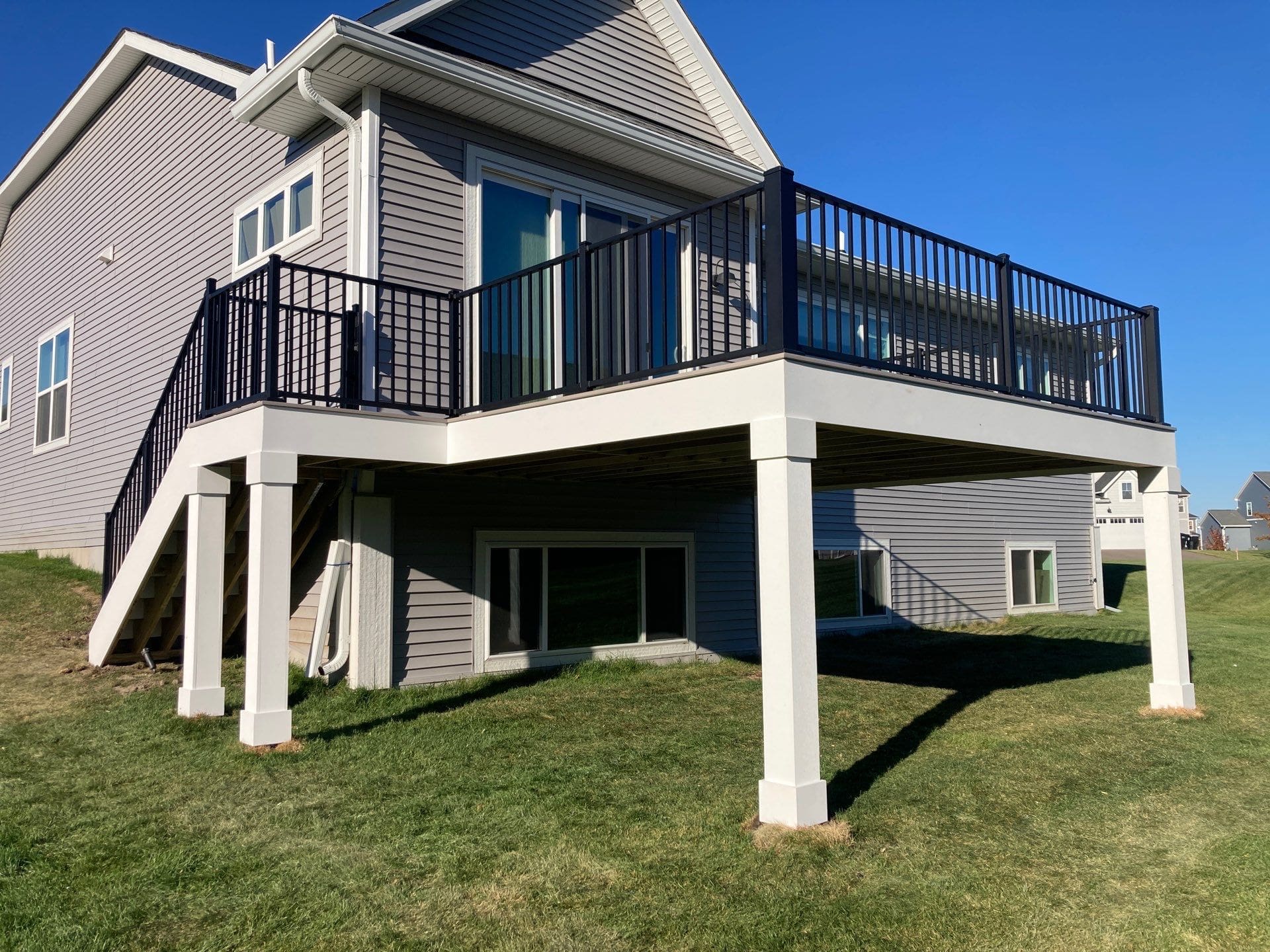


For Twin Cities homeowners planning a deck build or upgrade, one structural decision shapes the entire project more than any other — and it’s not the surface material, the railing, or the lighting. It’s the beam underneath it all. When you want fewer posts in your yard, a cleaner finished look, and more usable space below the deck, an engineered glulam beam is how you get there. Here’s what that means for your project and how to know if it’s the right choice.
In This Article:
- What Is a Glulam Beam?
- Wider Span, Better Utility
- How Glulam Compares to Standard Deck Framing
- Minnesota Climate Considerations
- What to Expect on Cost
- FAQ
What Is a Glulam Beam?
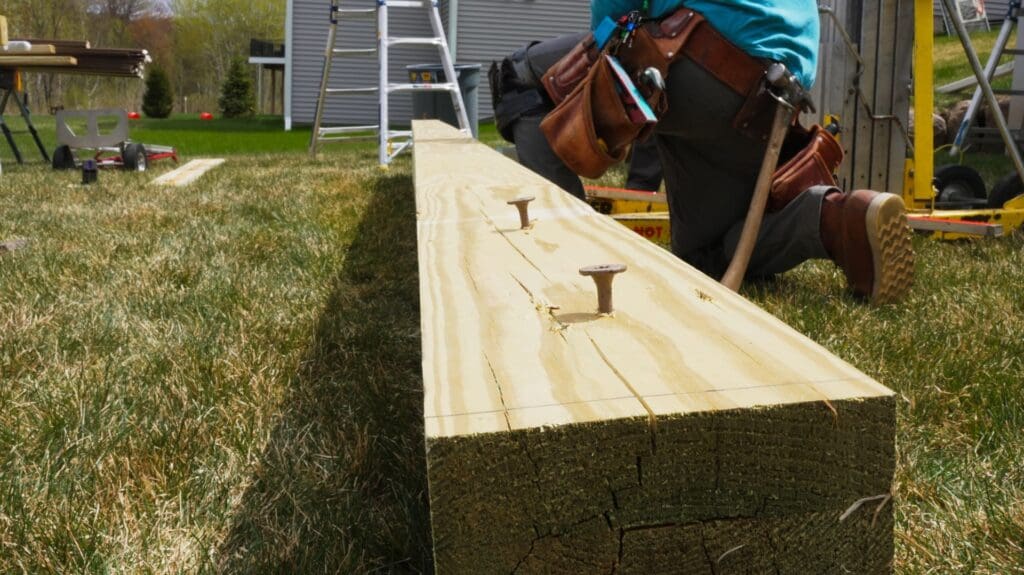
Glulam — short for glued laminated timber — is an engineered wood beam built by bonding layers of graded lumber together with structural adhesives. The manufacturing process is deliberate: the highest-quality wood is placed on the outer edges of the beam, where bending stress is greatest, while lower-grade material fills the center. The result is a beam that performs more consistently and carries heavier loads than a comparable built-up sawn-lumber beam.
Glulam is manufactured to ANSI A190.1 standards and carries a quality mark from an inspected facility — meaning every beam meets the same structural benchmark, not a field estimate. Getting the right beam starts before the order is placed. An experienced contractor reads the site conditions — span, load, exposure, and future use — and specifies accordingly. The beam is only as good as the contractor installing it.
Wider Span, Better Utility
The most practical reason to choose an engineered glulam beam is simple — wider spans, fewer posts, and a structure that meets code and holds up long term.
A standard Southern Pine built-up beam — the most common deck beam — can only span so far before it needs another post and footing. Glulam changes that math meaningfully. According to the AWC Deck Construction Guide, DCA 6:
- A standard deck beam typically needs a post every 10 to 11 feet.
- A mid-size glulam beam extends that to around 12 feet.
- A larger glulam can span over 15 feet — which on many Twin Cities decks means one less post and footing.
View the raw numbers here. AWC Deck Construction Guide span tables

Use these numbers to understand the concept — your contractor will size the beam correctly for your specific deck.
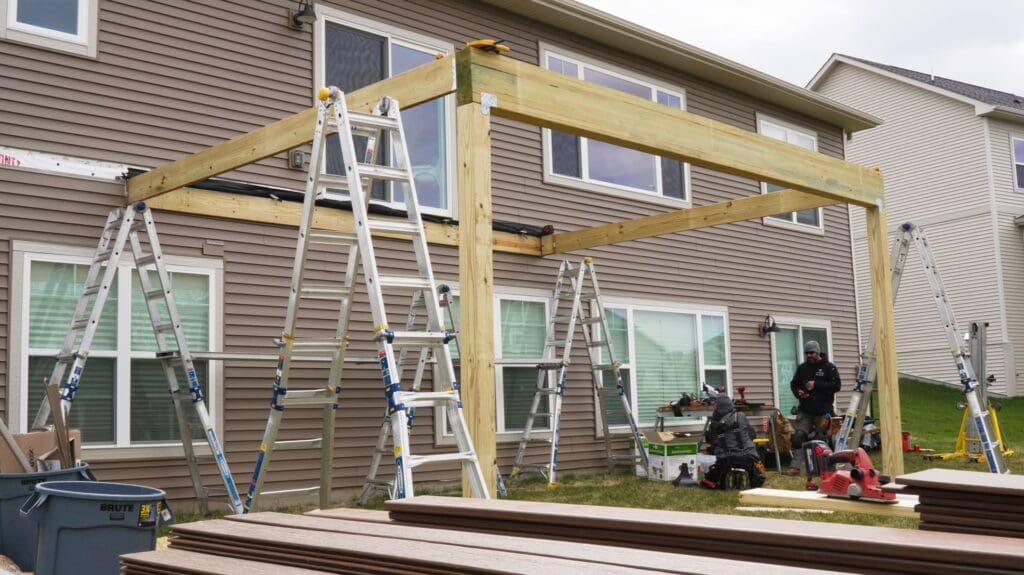
On a 24-foot-wide elevated deck, that difference can mean three support posts instead of four — or eliminating an entire post line. That single change opens up the space below in ways that are hard to fully appreciate until you’re standing under a deck that isn’t interrupted by columns.
For homeowners planning a patio, dry-under system, storage area, or simply a cleaner sightline into the backyard, fewer posts isn’t a minor upgrade. It shapes how usable the space below your deck can be.
How Glulam Compares to Standard Deck Framing
Two beam types are worth knowing for an exposed exterior deck in the Twin Cities.
Built-up sawn lumber is the default and the most common starting point. It’s familiar, easy to permit, and follows the prescriptive path in Minnesota’s residential code without additional engineering documentation. The trade-off is post spacing — for a given beam depth, sawn lumber requires closer support than an engineered alternative.
Treated exterior glulam is the choice when you want wider spans, fewer posts, and a beam that holds up to permanent weather exposure. It’s manufactured and rated for the conditions a Minnesota deck actually faces, and it looks better when left visible — important if the beam is part of the design rather than hidden behind fascia.
A note on LVL: Laminated veneer lumber is a strong and widely used engineered beam, but most major manufacturers specify it for dry or protected indoor conditions. For exterior decks, treated glulam is the product we are focusing on in this article.
Learn more about our deck services at Voyager Exteriors.
Minnesota Climate Considerations
Minnesota winters are hard on exposed structure. Freeze-thaw cycles and wet-dry exposure mean your beam selection and finish matter — treated exterior glulam is built for these conditions, and periodic finish maintenance keeps it looking the way it should over time.
Homeowners often notice cracks developing on the surface of the beam over time. These are called seasoning checks — superficial cracks that form as the beam acclimates to outdoor moisture conditions. They are normal and cosmetic, not structural.
Two other things worth planning for. First, if there’s any chance your deck becomes a screened porch, pergola, or enclosed space down the road, size the beam for those future loads now. Second, permit requirements vary by jurisdiction across the Twin Cities — a contractor familiar with local requirements is the most straightforward way to navigate these decisions for your project.
What to Expect on Cost
Glulam is a premium material, so it helps to know when it is most cost effective and useful for your project. The clearest scenarios where it earns its place:
- Elevated decks where the space below matters for patio use, storage, or finished appearance.
- Projects with wrapped columns, dry-under systems, or finished under-deck details.
- Decks where the beam is exposed and visible as a design feature.
- Situations where future upgrades — a roof addition, enclosure, or screen porch — make proper sizing a one-time investment.
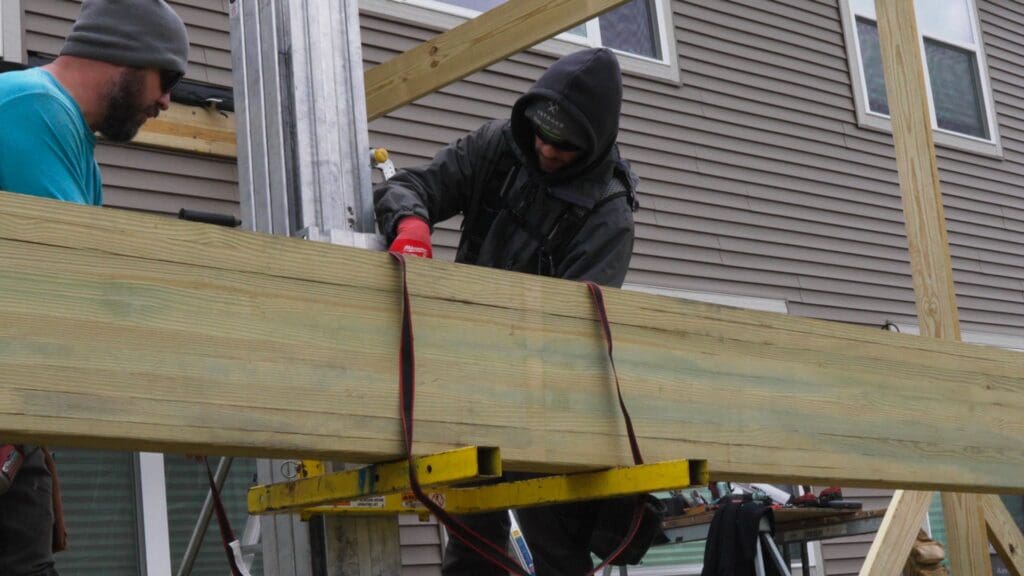
The cost conversation is project-specific, but there’s a natural offset worth understanding. Glulam costs more than standard sawn lumber, but eliminating even one post and footing can narrow that gap meaningfully. In the Twin Cities, footings are a real line item — and one less footing often brings the upgrade closer to cost-neutral than homeowners expect.
Looking for more guidance on your project? Contact us for a quote specific to your project — the right beam choice depends on your deck’s dimensions, load, and what you want the space to do.
Frequently Asked Questions
Is glulam approved for use in Minnesota deck construction? Yes. Minnesota’s 2020 Residential Code recognizes structural glued laminated timbers, and glulam is a standard part of the engineered wood framework used in residential construction. The key is using treated or otherwise exterior-approved glulam for exposed deck applications, and confirming the permit path with your local jurisdiction. Some jurisdictions require dimensioned plans and engineering review for beams that deviate from standard prescriptive sawn-lumber sizing.
How much farther can a glulam beam span compared to a standard deck beam? It depends on beam size and load, but published AWC span tables show meaningful differences. For a deck with 12-foot joists under standard loading, a 5.25″ × 11-7/8″ glulam can span roughly 15’7″ compared to about 10’6″ for a standard Southern Pine 3-2×12 built-up beam. That extra span is what allows fewer posts on wider decks.
Does glulam require more maintenance than regular wood? An exposed glulam beam is not zero-maintenance. Treated exterior glulam is built for the conditions, but any beam exposed to Minnesota’s wet-dry and freeze-thaw cycles may develop surface checks over time — these are cosmetic, not structural. Periodic finish touch-ups protect appearance and keep the beam looking the way it should over time.
Ready to explore what a deck upgrade could look like for your home? The Voyager Exteriors team works with Minnesota homeowners on exterior projects that are built for the climate and designed for how you actually live. Contact us.
Learn about other ways to upgrade your deck at this article: 7 Deck Upgrades That Elevate Twin Cities Homes