Give Us a Call!
(612) 998-9500
Give Us a Call!
(612) 998-9500 

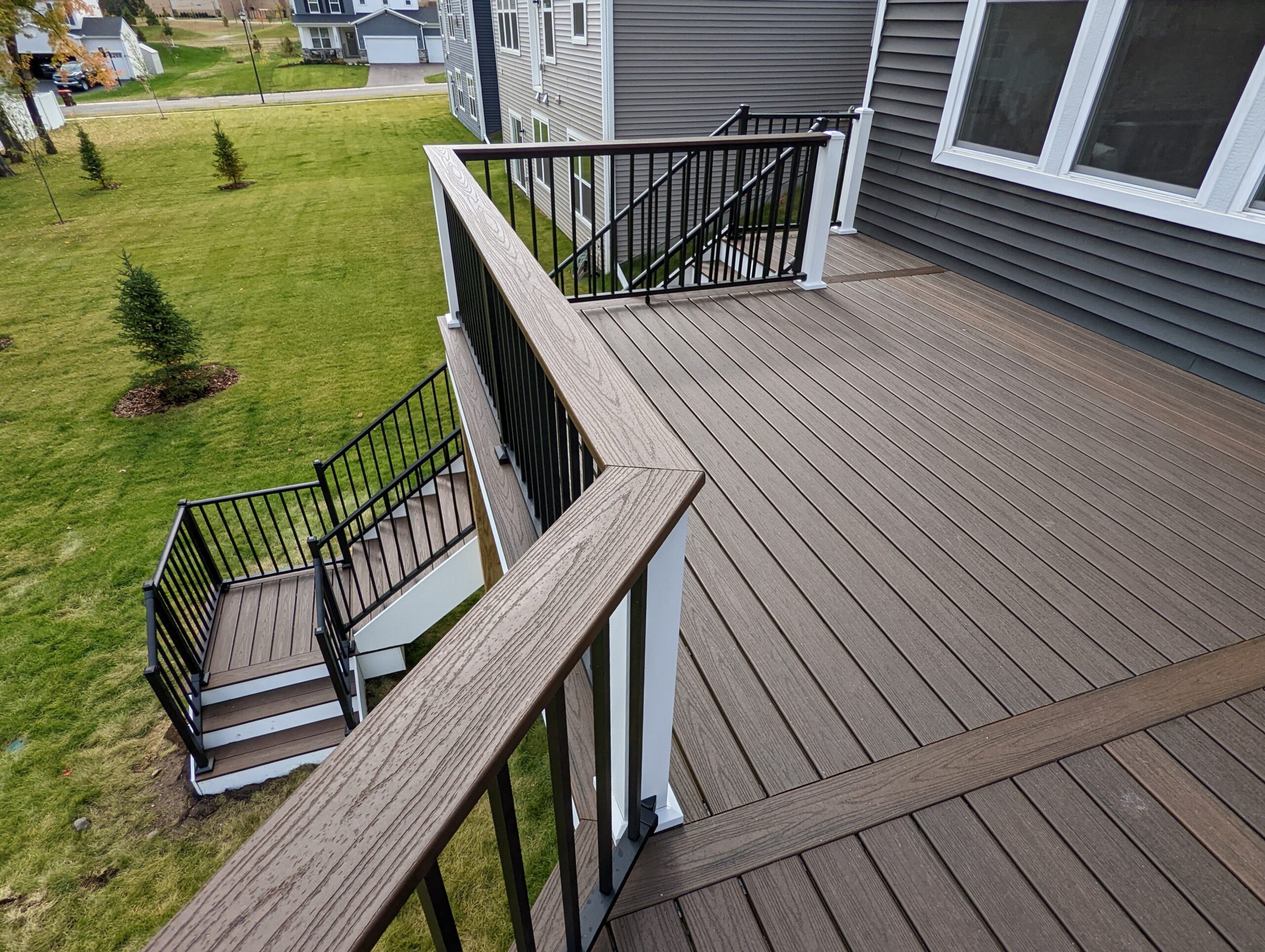


Drink rails? Your deck already has everything it needs to be a great entertaining space. A drink rail is what unlocks it. It gives guests a place to land, frees up your floor, and turns the perimeter of your deck into a feature that elevates the aesthetic impact.
In This Article:
- What Is a Deck Drink Rail?
- Why It Changes How You Entertain
- Which Brands Offer Drink Rails?
- Style and Color Pairings That Elevate the Look
- Is a Drink Rail Right for Your Deck?
- FAQ
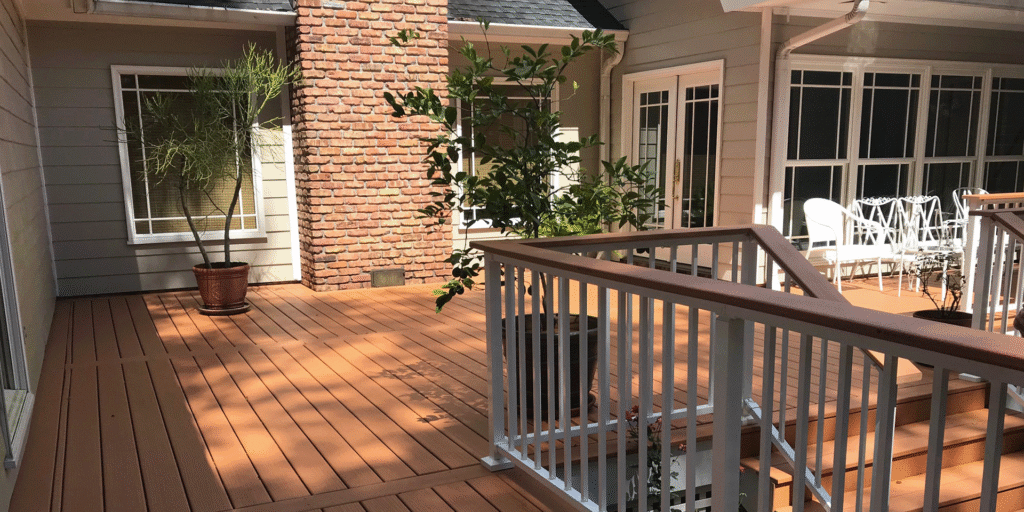
What Is a Deck Drink Rail?
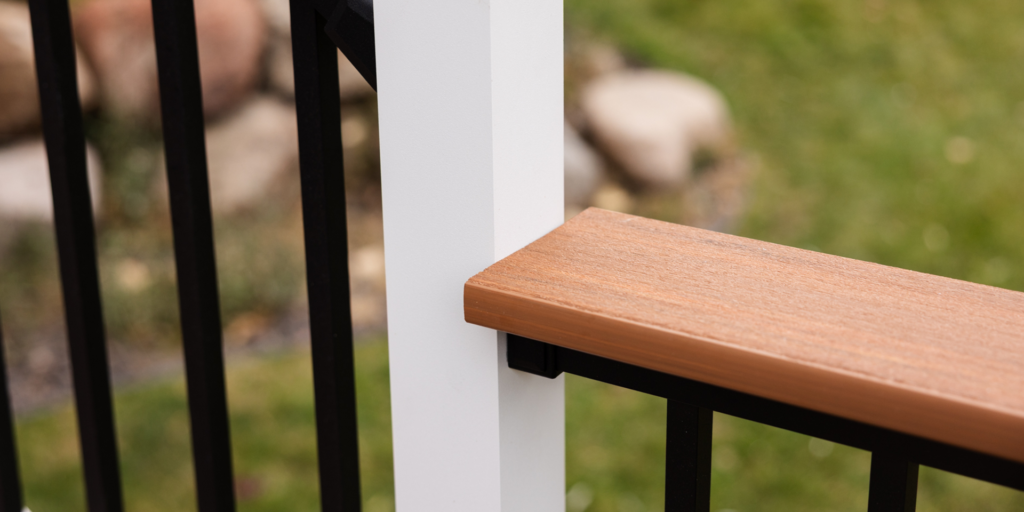
A drink rail is a flat, usable top surface built into — or mounted on top of — your deck railing. Instead of a standard narrow top rail, you get a wide, level ledge. Wide enough to hold drinks, plates, candles, a phone, or a small potted plant.
There are two main types:
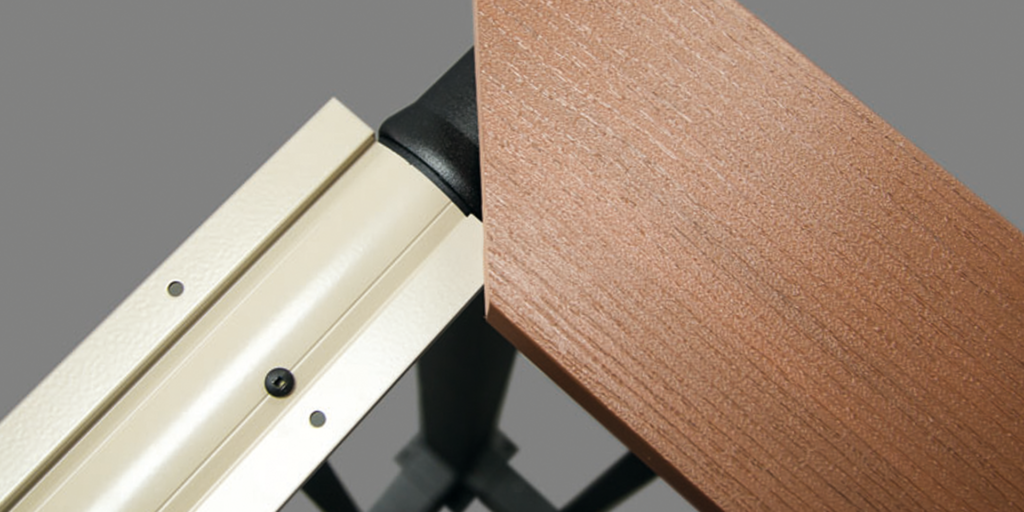
Board-Top System A full composite or PVC deck board is fastened over a compatible aluminum or composite sub-rail. TimberTech, Trex, and Westbury all use this approach. It’s a great fit when you want the drink rail to match or complement your deck surface.
Integrated Flat-Top Rail The railing itself is designed with a wide, flat surface built in — no cap board needed. Kadenz, a Minnesota-based aluminum railing manufacturer, is the standout example. The drink rail effect is part of the system, not an add-on.
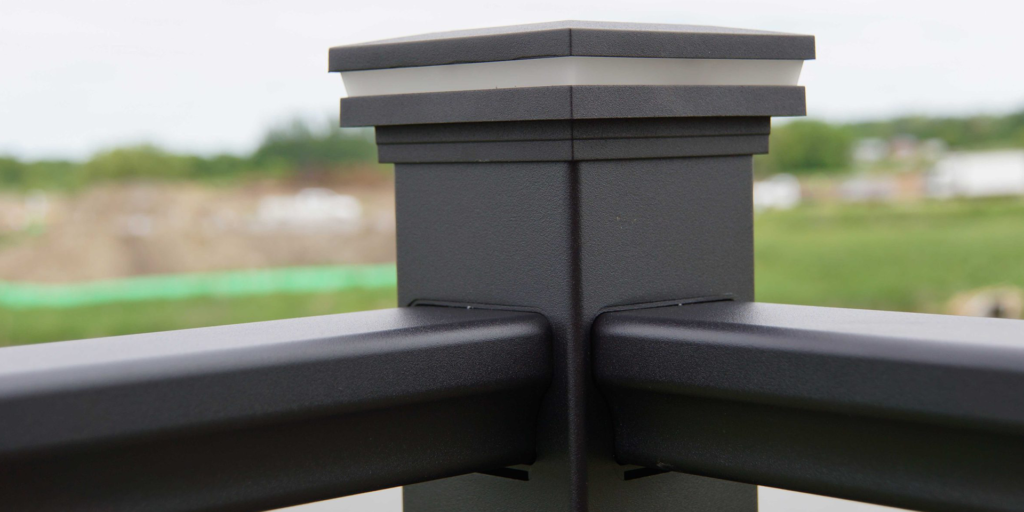
Both work. The right choice comes down to your railing system, your deck boards, and whether you’re building new or upgrading what you already have.

Why It Changes How You Entertain
The practical difference is immediate. Drink rails create usable perimeter surface area without stealing a single square foot of deck floor. You don’t need to squeeze in side tables, and your guests aren’t hunting for a place to set something down.
It also changes the look of the railing itself. A well-designed drink rail makes the perimeter of your deck feel intentional — like part of the architecture, not just a code requirement. On smaller decks especially, this kind of dual-purpose design is the difference between a space that feels tight and one that flows.
Think of it this way: your railing is already there. A drink rail just asks it to do more.
Which Brands Offer Deck Drink Rails?
Voyager Exteriors works with four brands that handle deck drink rails well, each with a different strength.
TimberTech offers drink-rail options in both its Classic Composite Series and Impression Rail Express lines. Classic is the more versatile of the two — it accepts full-profile square-shouldered boards in a wide range of colors. Impression Rail Express has a more modern, metal-forward look and is ideal when the design calls for clean lines and a darker palette. Both require full-profile, square-shouldered boards — scalloped profiles won’t work here.
Explore TimberTech drink rails.
Trex calls theirs a cocktail rail, and it’s available across both Transcend and Signature systems. Trex Signature is particularly strong for modern projects and allows the cocktail adapter to pair with an impressive range of infill options, from classic balusters to cable and rod.
Westbury takes a different angle. Their Drink Rail Adapter is a standalone aluminum piece that attaches to compatible Westbury railings and accepts wood or composite boards on top. It’s the most retrofit-friendly option of the group — a strong choice if your railing is already Westbury or if you want to add a drink rail to an existing deck without a full rebuild.
Kadenz, headquartered in Wyoming, Minnesota, designs their railing systems so the flat top rail is the drink rail. No adapter needed, no cap board to source. Their Elegance line offers top rails that can run up to 20 feet in a single uninterrupted span — a distinctive look for modern or more architectural homes.
Style and Color Pairings That Elevate
A drink rail can do one of two things visually: disappear into the deck or stand out as a design feature. Both are valid. It’s a choice you make intentionally.
To match: Use the same board family on the deck and the drink rail. This creates a custom, built-in feel where the railing looks like an extension of the deck surface rather than a separate element. TimberTech and Westbury both support this approach directly.
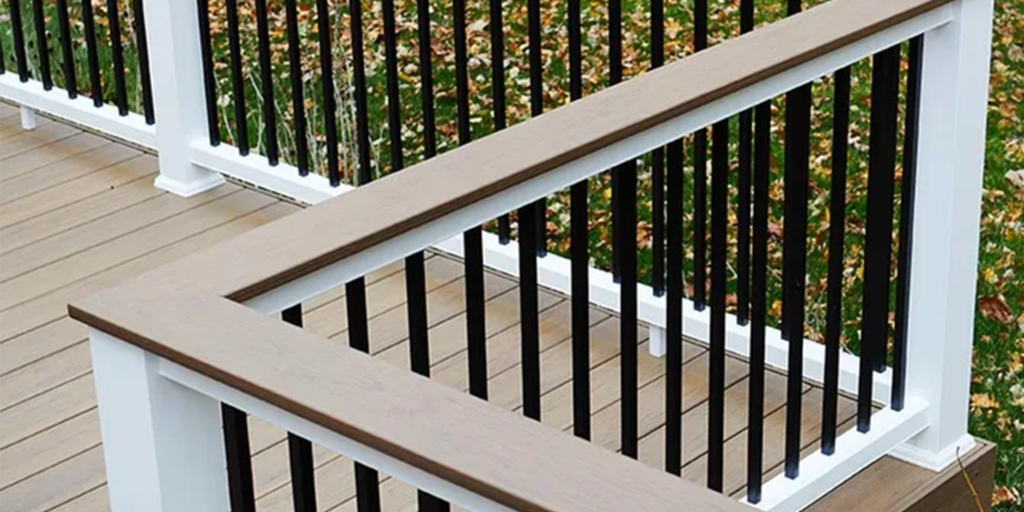
To contrast: Choose a deck board color and rail frame color that create a clear tonal difference. A dark rail framing a lighter board, or vice versa, gives the railing a sharper, more architectural presence.
Here are four pairings that work well for Minnesota homes:
- Weathered gray decking + matte black railing — crisp, modern, and popular in Minneapolis and Edina neighborhoods. Try TimberTech Sea Salt Gray with Matte Black Classic rail framing.
- Warm brown decking + white railing — a bright, traditional combination that reads beautifully in suburban settings. TimberTech Dark Hickory or Trex Havana Gold with Classic White railing.
- Charcoal or greige decking + dark bronze rail — more architectural, leaning into a luxury exterior feel. Trex Biscayne or TimberTech Castle Gate with Kadenz Textured Bronze or Westbury Bronze Fine Texture.
- Warm wood-tone decking + clean white railing — a timeless lake-country look. Works beautifully with Kadenz White or Westbury Gloss White against any warm composite board.
One general guideline for shaded decks: lighter top surfaces reflect more light and keep the space feeling open. Darker boards absorb light but create a more grounded, dramatic atmosphere. Minnesota’s summers are short — choose a color strategy that makes the most of the light you have.
Learn about color combinations with Trex
Is a Drink Rail Right for Your Deck?
Drink rails are a strong fit for most decks, but there are a few things worth knowing before committing.
Compatibility matters. Not every railing system supports a drink rail, and not every deck board can serve as the top surface. Scalloped or hollow-profile boards generally don’t work with board-top drink-rail systems. If you’re retrofitting, the brand and model of your current railing matters — Westbury is the most accommodating, while TimberTech and Trex are more system-specific.
They’re a light-duty surface. Drink rails are designed to hold beverages, small plates, and décor — not heavy planters, not people sitting on them. Set the right expectations and they perform exactly as promised.
Minnesota weather is not the problem. Composite, PVC, and powder-coated aluminum all perform reliably through freeze-thaw cycles, heavy snow loads, and strong summer sun. TimberTech and Trex emphasize moisture resistance across their railing lines; Westbury and Kadenz both carry architectural-grade powder-coat finishes built for long-term exterior exposure. Maintenance is minimal — a periodic wash and occasional inspection of post connections keeps these systems looking sharp year after year.
FAQ
What decking brands are compatible with drink rail systems? TimberTech and Trex drink rails are designed to coordinate with their own board families. Westbury and Kadenz are more open — Westbury accepts most wood or composite boards, and Kadenz doesn’t require a cap board at all. If you’re working with a specific deck board, your contractor can confirm compatibility before the project starts.
Can I add a drink rail to my existing deck? In many cases, yes. Westbury is the most retrofit-friendly option and offers a standalone adapter that fits over compatible aluminum railings. TimberTech Classic can also work as a retrofit if the existing railing is compatible. Other systems may require a full railing replacement to add a drink rail cleanly.
How wide is a typical deck drink rail? Most board-top drink rails land between 5 and 6 inches wide — wide enough for a glass, a plate, or a candle, but not so wide that it overloads the visual weight of the railing. Integrated aluminum systems like Kadenz vary by design. Your contractor can show you profile options before you choose.
Ready to Upgrade Your Deck?
A drink rail is one of those finishing moves that changes how a deck feels the moment you step onto it. It’s functional, it’s beautiful, and it makes a railing work for the people using the space — not just the building code.
If you’re planning a new deck or a railing upgrade in the Twin Cities, the Voyager Exteriors team can walk you through your best options across TimberTech, Trex, Westbury, and Kadenz.
Request a free design consultation