Give Us a Call!
(612) 998-9500
Give Us a Call!
(612) 998-9500 


If you’re planning a new deck or replacing an old one, you’ve probably asked: what are the best low-maintenance deck ideas that will hold up through a Twin Cities winter without eating up your weekends every spring? The answer starts with materials, but it doesn’t end there. Layout, railing, drainage, board direction, and a few construction details all factor into how much time you actually spend taking care of your outdoor space over the life of the deck.
This guide walks through the full picture — from surface materials to color choices to the seasonal habits that keep any deck in good shape.

In This Article:
- What low-maintenance really means
- How it compares to pressure-treated wood
- Decking materials that reduce upkeep
- Color and finish options worth considering
- Railing, lighting, and stair choices that simplify ownership
- Deck layout and space planning
- Design details that reduce cleaning headaches
- Twin Cities-specific maintenance factors
- Questions to bring to a deck consultation
- FAQ
What Low-Maintenance Really Means
“Low-maintenance” doesn’t mean no maintenance. What it means is fewer annual tasks, no sanding or staining, easier spring cleanup, and materials that don’t punish you for skipping a season.
For most Twin Cities homeowners, the biggest time sinks on a traditional wood deck are: annual sealing or staining, addressing cracks or warping caused by freeze-thaw cycles, and scrubbing off mold or mildew that builds up under shade or leaf cover. Depending on the wood species and the products used, a well-maintained pressure-treated deck can demand a full weekend of prep and staining every one to two years. Add in spot repairs as boards cup or crack, and the time commitment adds up fast.
Low-maintenance deck ideas target those specific pain points — through smarter material choices, thoughtful layout decisions, and construction details that prevent debris buildup in the first place. The goal is more time using the deck and less time working on it.
What remains: a twice-a-year rinse, clearing leaves before they stain lighter boards, and using the right shovel in winter. Low-maintenance shifts the burden significantly. It doesn’t eliminate it entirely.

How It Compares to Pressure-Treated Wood
Pressure-treated lumber is still the most common starting point for deck builds in the Twin Cities, mainly because the upfront material cost is lower. But total cost of ownership — in both money and time — looks different over a 10- or 15-year horizon.
A pressure-treated deck typically needs sealing or staining every one to two years to resist moisture and UV damage. Skip it for a season or two and you’ll start seeing graying, surface cracking, and warping. Add in the cost of stain, brushes, and a weekend of labor each time, and the savings narrow considerably. Boards that cup or crack need to be replaced, which adds more material and labor cost down the line.
Composite and PVC decking cost more to install initially, but they eliminate the staining cycle entirely. A rinse with soap and water handles most cleaning. That trade-off — higher upfront investment, meaningfully lower ongoing time and cost — is the core case for low-maintenance decking. Whether it makes sense for your household depends on budget, how long you plan to stay in the home, and honestly, how much you enjoy spending a weekend with a paint sprayer.
Decking Materials That Reduce Upkeep
The surface material is the single biggest maintenance driver on any deck. Here’s where low-maintenance deck ideas start in earnest.
Composite Decking
Composite decking combines wood fiber and plastic resin into a board that looks and feels like wood without requiring the same ongoing care. The key distinction to understand before shopping: capped composite vs. uncapped composite. Capped boards have a protective polymer shell on all four sides that resists moisture, staining, and mold. Uncapped composite boards don’t have that protection and are significantly less durable. When evaluating composite options, ask specifically whether you’re looking at a capped product.
Capped composite boards don’t need to be sanded, stained, or sealed. Cleaning is typically soap and water once or twice a year, plus rinsing off pollen in spring.
Trex is one of the most widely available composite brands in the Twin Cities market. Their lineup ranges from the entry-level Trex Enhance® (lighter scalloped profile, 25-year limited residential warranty) up through Trex Select® (35-year) and Trex Transcend® / Trex Transcend® Lineage® at the top of the line (50-year limited residential warranty). The Transcend Lineage boards include heat-mitigating technology called SunComfortable — designed to run cooler on hot summer days compared to standard composite boards. Most Trex composite decking is made from up to 95% recycled materials.
TimberTech also offers capped composite lines designed to handle freeze-thaw conditions [VERIFY: current TimberTech product line names, series, and warranty details — timbertech.com]. Homeowners we work with often compare TimberTech and Trex directly; both are solid options and the decision typically comes down to color availability, contractor familiarity, and local pricing.
The trade-off with composite: higher upfront cost than pressure-treated lumber, and composite surfaces can get warm in direct summer sun. Lighter colors and heat-mitigating product lines help with this. Whether the upfront investment makes sense depends on how you weigh material cost against the years of staining and maintenance you’re trading away.
Cellular PVC Decking
PVC (polyvinyl chloride) decking contains no wood fiber at all, which means there’s nothing organic for moisture or mold to work on. In the Twin Cities climate — where freeze-thaw cycles are a real stress test for exterior materials — that’s a meaningful advantage. There’s essentially nothing to absorb moisture in the first place.
AZEK is the most recognized PVC decking brand. Their boards resist moisture absorption, surface staining, and scratching in ways that capped composite can’t fully replicate [VERIFY: AZEK current product collections, key features, and warranty details — azek.com]. Boards are available in a broader range of colors and finishes than they were even five years ago.
Two practical trade-offs worth knowing: PVC surfaces can show scratches more readily than some capped composite options, and the material tends to carry a higher upfront cost. PVC also has a slightly different feel underfoot than composite — some homeowners prefer it, some don’t. Ordering samples and comparing them in your actual backyard lighting is worth doing before you commit to a surface that will be there for decades.
For homeowners who want the absolute lowest ongoing maintenance and have the budget for a premium surface, PVC is worth a serious conversation with your contractor.
How to Choose Between the Two
Both capped composite and cellular PVC eliminate the staining and sealing cycle. The decision between them comes down to budget, aesthetic preference, and site conditions.
PVC has the edge in high-moisture environments — under trees, on north-facing exposures, or anywhere the deck stays damp for extended periods. Because there’s no wood fiber to absorb moisture, the boards don’t react to prolonged wet conditions the way composite can over time. Composite, on the other hand, often provides a broader range of wood-grain aesthetics, more color options at mid-range price points, and wider contractor familiarity across the Twin Cities market. Most homeowners find capped composite to be the right balance of performance and cost. PVC becomes the more compelling option when moisture exposure is high or when a homeowner is specifically optimizing for the absolute minimum ongoing maintenance.
One useful exercise before deciding: ask your contractor to bring samples of both to your site. Colors look different in your specific backyard light — north-facing shade vs. open sun exposure — than they do on a website or in a showroom.
Color and Finish Options Worth Considering
One of the underrated parts of planning a low-maintenance deck is that you’re choosing a surface that will look essentially the same for years without restaining. That makes the initial color decision more permanent than it is with wood, and worth more deliberation.
Light vs. dark boards. Lighter deck colors tend to show scratches less than darker ones and run cooler in direct sun. The trade-off: light boards show pollen, bird droppings, and surface dirt more visibly between cleanings. Darker boards minimize surface grime visibility but absorb more heat. In a Twin Cities summer, that can be noticeable underfoot — particularly for households with kids or pets spending time on the deck.
Gray tones remain popular across the metro. Weathered driftwood grays pair well with the painted craftsman and colonial homes common in suburbs like Edina, Eden Prairie, and Minnetonka. Warm cedar and brown tones work well against brick and limestone exteriors found in older Twin Cities neighborhoods. Neither palette trends quickly, which matters when you’re choosing a surface that will be there for 20-plus years.
Wood grain vs. smooth finish. Most composite and PVC lines offer realistic wood-grain embossing that adds texture and hides minor surface scratches better than a smooth finish. Smooth finishes tend to look more contemporary and suit modern architectural homes. The Trex Transcend Lineage line uses a linear grain pattern with a more refined, less rustic look than traditional composite grain — worth comparing side by side if you’re considering mid-to-premium composite options.
Multi-tonal vs. monochromatic. Multi-tonal boards — with natural color variation running through each plank — tend to hide dirt, fading, and wear more gracefully than single-color boards. Monochromatic boards offer a cleaner, more uniform aesthetic for contemporary deck designs. Both are available across most composite and PVC lines.
How deck color interacts with your house. A deck that’s a shade or two darker than the trim tends to read as intentional and grounded. Very light decks against darker homes can feel disconnected. When in doubt, pull the deck color toward the siding or trim rather than contrasting it sharply — that choice tends to age better and require less repainting of adjacent trim to stay current.
Railing, Lighting, and Stair Choices That Simplify Ownership
Decking gets most of the attention in any low-maintenance deck ideas conversation, but railing and stair choices carry just as much weight in the overall maintenance picture.
Railing That Doesn’t Fight You
Wood railing requires the same annual attention as wood decking — sometimes more, because posts and balusters trap moisture and debris in ways that flat deck boards don’t. Aluminum and composite railing systems don’t rust, rot, or need painting.
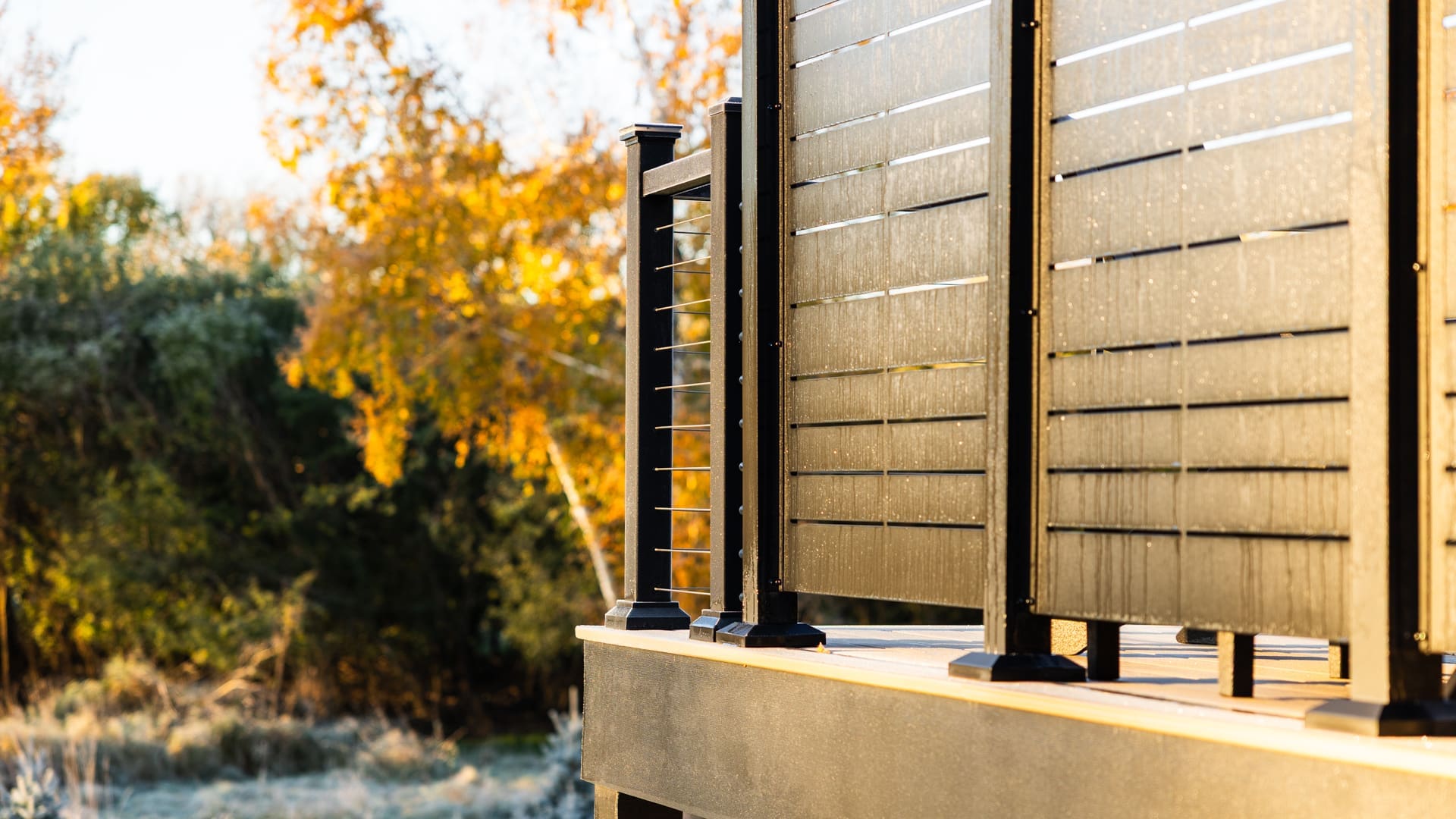
Westbury and Kadenz are two aluminum railing brands that integrate cleanly with composite and PVC deck surfaces. Aluminum railing is powder-coated in a range of colors — black, bronze, white, and gray are the most common choices in the Twin Cities — and requires very little upkeep beyond an occasional rinse.
Trex’s railing lineup (Transcend, Select, and aluminum Signature options) pairs well with their decking lines and follows the same low-upkeep care routine.
Cable railing is worth mentioning separately. Horizontal stainless steel cable opens up sightlines — especially useful on decks that overlook a yard, water, or a view worth preserving. There are no wood components to maintain. The trade-offs: cable tensioning requires periodic checking (typically once a year), local building codes govern cable spacing and post requirements, and the stainless hardware can be more expensive than standard baluster systems.
Glass panel railing is another option for sightline-focused projects. It delivers an unobstructed view and a modern aesthetic, and the tempered glass panels require minimal care. The trade-off is visible fingerprints and water spots that require more frequent wiping than aluminum or cable options.
For most Twin Cities homeowners, aluminum railing paired with composite or PVC decking is the lowest-effort combination over time.
Integrated Lighting
Built-in deck lighting reduces the need for freestanding fixtures that collect debris or require seasonal removal. Post cap lights, stair riser lights, and recessed deck board lights keep your deck functional in the evening without adding maintenance touchpoints. They’re also significantly harder to knock over, trip on, or lose at the end of the season than plug-in accent lighting.
Low-voltage LED systems are the standard option today — they run cooler, last longer, and consume less power than older fixtures. Most composite and aluminum railing manufacturers offer lighting accessories designed to integrate with their systems.
Stair Design
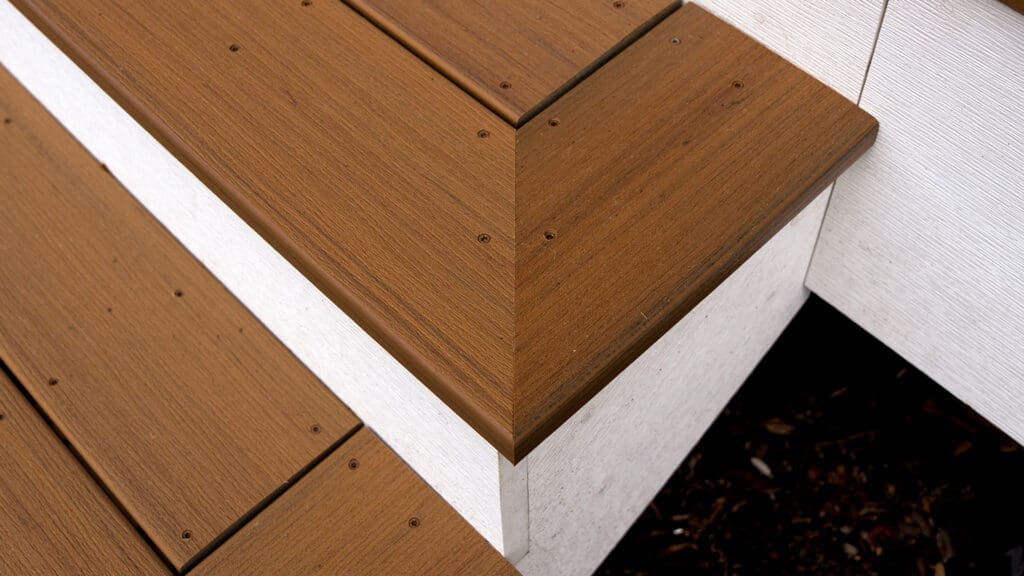
Composite or PVC stair treads match your main deck surface and follow the same care routine. Open-riser stairs accumulate less debris than fully enclosed stringer designs, though local code requirements apply — worth confirming with your contractor before finalizing a stair layout.
Deck Layout and Space Planning
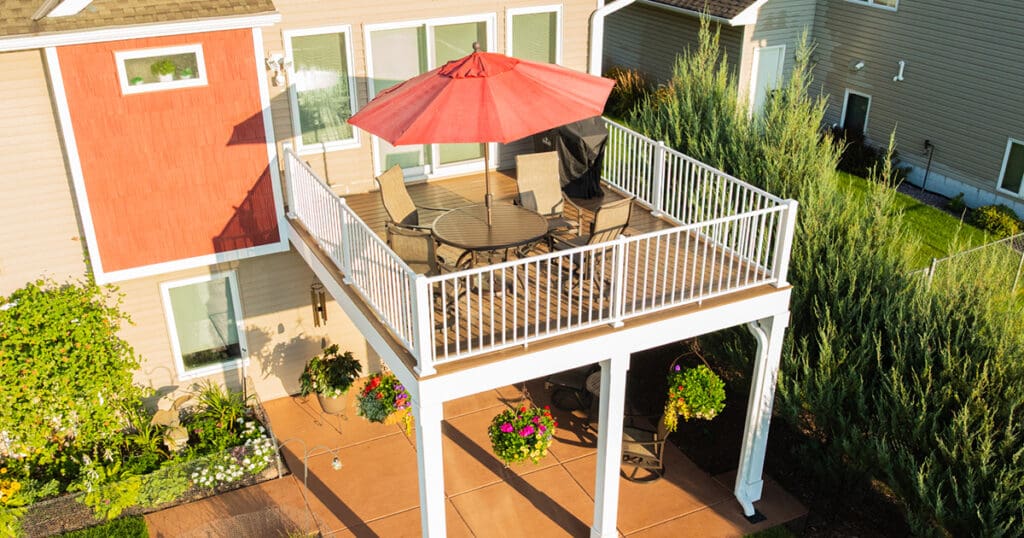
The physical footprint of your deck affects how much time you spend cleaning and maintaining it — sometimes significantly. A layout that matches how you actually use your outdoor space tends to be easier to live with than one sized to fill a yard.
Single-level vs. multi-level. A single-level deck is simpler to clean, simpler to drain, and has fewer structural transitions where moisture can accumulate. Multi-level decks add visual interest and can work well for yards with grade changes, but they introduce more joints, more ledger connections, and more surfaces to inspect and maintain. For homeowners primarily focused on low-maintenance ownership, a well-designed single-level deck often serves better than a complex multi-level layout.
Size relative to use. A deck that’s larger than you’ll consistently use becomes more surface area to sweep, clean, and shovel. Most contractors will tell you that homeowners routinely overbuild deck size relative to how they actually use the space. Think through your realistic entertaining habits — how many people are you hosting when the deck is at full capacity? Is that weekly, or a handful of times per year? Right-sizing the deck to actual use, rather than maximum capacity, keeps the maintenance footprint proportionate.
Traffic patterns and board wear. Areas around the grill, near the door, and at stair landings see heavier foot traffic than the rest of the deck. Composite and PVC boards handle traffic well, but high-traffic zones benefit from boards with higher scratch resistance — like Trex Transcend or comparable premium capped composite options — rather than entry-level lines where the surface finish is thinner [VERIFY: scratch resistance by product line — trex.com].
Zone planning. Some homeowners design decks with distinct zones — seating, dining, grilling — using board direction changes or built-in planters to define spaces. This can work well aesthetically, but each transition point is another area where debris accumulates. Clean, continuous zones with simple layout logic are easier to maintain than heavily detailed multi-zone designs.
Outdoor furniture and accessories. Heavy patio furniture left in place year-round traps moisture and debris underneath and can cause surface staining on lighter-colored composite boards. Furniture with rubber feet or composite-safe pads distributes weight more evenly and reduces contact-related discoloration. Planters placed directly on the deck surface can create moisture traps — elevating them slightly with feet or risers improves airflow underneath. Grills present their own consideration: gas grills with drip trays are a cleaner pairing with low-maintenance decking than charcoal grills, which can mark surfaces with grease and radiant heat if positioned too close.
Design Details That Reduce Cleaning Headaches
A deck’s construction details affect how much time you’ll spend cleaning it — sometimes more than the material choice itself.
Simpler shapes clean faster. Multi-level decks and L-shaped designs have more corners, joints, and transitions where leaves, pollen, and pine needles accumulate. A clean rectangle with consistent board direction is easier to sweep and spray down. That’s not a reason to avoid a multi-level design if it fits your yard — but it’s a real trade-off worth naming upfront.
Board direction and drainage. Boards laid parallel to the house naturally direct water toward the deck’s edge. Fascia boards create a finished look but need proper drainage clearance behind them — trapped moisture behind fascia is where long-term problems start, even on composite surfaces.
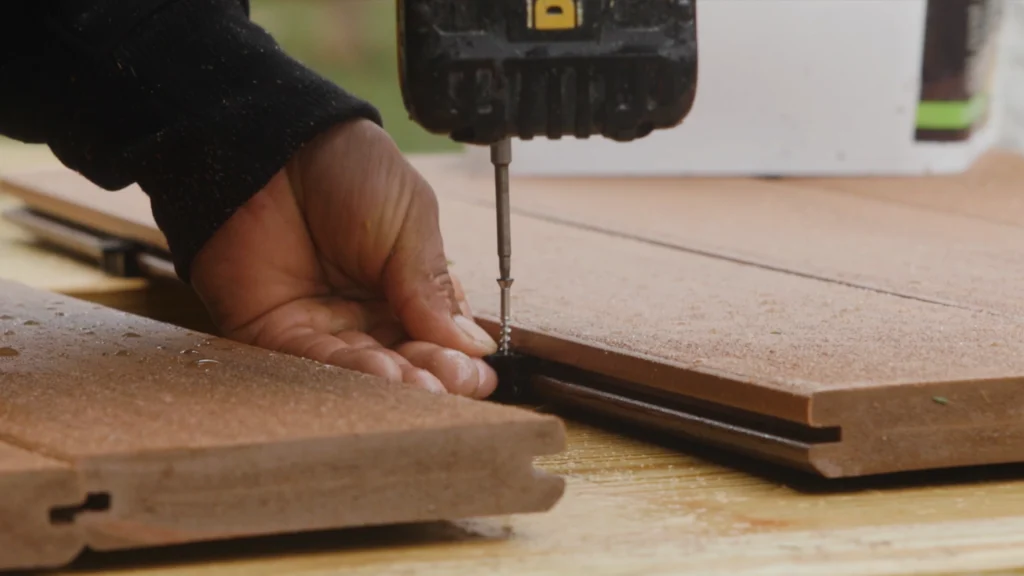
Hidden vs. visible fasteners. Hidden fastener systems — clips that hold boards in place without surface screws — eliminate the holes that collect debris and moisture over time. They also deliver a cleaner surface appearance. Visible fasteners are less expensive and easier to install, but the surface holes accumulate debris over years. For a low-maintenance surface, hidden fasteners are worth the marginal additional cost.
Under-deck drainage. If your deck is elevated, an under-deck drainage system channels water away from the space below, which can then be used for storage, outdoor seating, or simply kept clean and dry. Systems like Trex RainEscape [VERIFY: current product name and specs — trex.com] install between the joists and direct water to a perimeter gutter. This also protects the framing below from repeated moisture exposure.
Skirting and under-deck access. Enclosed skirting looks polished but can trap leaves and pests without proper ventilation. If you’re adding skirting, plan for ventilation panels and at least one access panel for cleanout and framing inspection.
Shade, trees, and privacy. A deck under mature trees accumulates more leaf debris and stays damp longer after rain — more frequent sweeping and closer attention to drainage. That said, shade has genuine value during a hot Twin Cities summer. For homeowners who want overhead cover without the debris load, pergolas and shade structures provide cover while keeping most leaf fall off the deck surface. Privacy screening — composite lattice or board-and-panel panels — adds a vertical element without the maintenance of a planted hedge.
Substructure and framing. The deck surface gets all the attention in any low-maintenance discussion, but the framing underneath matters just as much. Composite and PVC boards can outlast the framing below them if the substructure isn’t built to match. Joist tape or wrapping applied to the top face of each joist before decking is laid protects framing from moisture exposure at fastener points — a relatively small addition to project cost that meaningfully extends the life of the structure below.
Twin Cities-Specific Maintenance Factors
Our climate adds a few specific considerations that don’t come up in milder markets.
Freeze-thaw cycles are the biggest differentiator. Capped composite and cellular PVC handle repeated freeze-thaw stress well because there’s little or no water absorption in the board itself. Pressure-treated wood and uncapped composite are more vulnerable — moisture absorbed in fall freezes and expands, forcing material apart over time. This is especially relevant at board ends and any horizontal surface that retains standing water.
Pollen season in spring coats deck surfaces with a yellow-green film. A simple rinse handles most of it; a soap-and-water scrub takes care of the rest before your first outdoor gathering of the year.
Snow removal matters too. Plastic or rubber-edged shovels prevent surface scratches on composite and PVC. Metal-edged shovels and sharp ice picks should stay off these surfaces. For ice, calcium chloride and rock salt are generally considered safe on composite decking, but confirm with your specific manufacturer before applying [VERIFY: approved ice melt products — trex.com/care, timbertech.com, azek.com].
HOA guidelines vary across Twin Cities suburbs. Communities in Edina, Wayzata, Eden Prairie, Woodbury, and elsewhere may have requirements around deck height, railing style, material color, or setbacks that affect your design choices. It’s worth confirming those requirements early — before you’ve committed to a layout.
Seasonal maintenance checklist:
- Spring: Rinse off pollen and winter debris; inspect fasteners, board edges, and ledger connections; confirm drainage is clear; check railing for any movement
- Summer: Soap-and-water wash as needed; inspect railing connections after heavy storms; confirm under-deck drainage is flowing freely
- Fall: Clear leaves promptly — wet leaves trap moisture and can stain lighter-colored boards; inspect fasteners and ledger before winter
- Winter: Use a plastic-edged shovel for snow; confirm ice melt product compatibility with your decking brand before first application
Safe structure matters regardless of what’s on the surface. Even a deck with premium low-maintenance boards needs a sound framing system, properly attached ledger board, and footings that meet local code requirements. The Minnesota Department of Labor and Industry publishes residential deck guidelines worth reviewing before you build.
Minnesota Residential Deck Guidelines → View Mn Res Decks PDF
Questions to Bring to a Deck Consultation
Low-maintenance deck ideas are easier to evaluate when you walk in with a few things already thought through. A few worth having answers to:
- How much time am I realistically willing to spend on deck upkeep each season?
- Do I have heavy tree coverage that will affect material choice or board orientation?
- What’s my priority — lowest upfront cost, or lowest long-term maintenance cost?
- Are there HOA guidelines or city permit requirements I need to confirm before we finalize a design?
- What railing system pairs best with the decking material I’m leaning toward?
- Is there a practical way to use the space under the deck, and should drainage factor into the design?
In our experience working with homeowners across the Twin Cities — from Woodbury and Eagan to Plymouth and Prior Lake — the answers to these questions shape the project more than any product brochure does. The right deck for a shaded backyard with three mature oaks looks different from the right deck for an open, sun-exposed lot in a newer development.
Need a low-pressure consultation. We love helping homeowners find their way. Voyager Exteriors Decking Services
FAQ
What is the lowest maintenance deck material? Cellular PVC decking — like AZEK — contains no wood fiber, which makes it the least reactive to moisture and the easiest to clean. Capped composite decking like Trex Transcend or TimberTech’s capped lines is a close second and often available at a more accessible price point. Both require significantly less upkeep than pressure-treated wood over a 10-year span.
What’s the difference between composite and PVC decking? Composite decking combines wood fiber and plastic resin. PVC decking is entirely plastic with no wood content. In practice, both eliminate sanding, staining, and sealing. PVC resists moisture more completely because there’s no organic material to absorb it. Composite typically offers a broader range of wood-grain aesthetics at a lower price point. Both are legitimate low-maintenance deck ideas depending on your budget and site conditions.
What railing is easiest to maintain? Aluminum railing is generally the lowest-maintenance option — it doesn’t rust, rot, or need painting. Composite railing follows a similar care routine to composite decking. Both are meaningfully easier to maintain than painted wood railing, especially through the Twin Cities freeze-thaw season.
How do nearby trees affect deck maintenance? Mature trees provide valuable shade during a Twin Cities summer — which is genuinely useful on a hot July afternoon — but they also mean more debris: leaves, pine needles, sap, and pollen landing on the deck surface. Decks near or under trees need more frequent rinsing and closer attention to drainage. For homeowners who value the shade, it’s a reasonable trade-off; factor it into material and color choices and board orientation.
What does a low-maintenance deck still require? Seasonal cleaning with soap and water, occasional fastener and ledger inspections, proper snow removal with the right tools, and prompt leaf clearance in fall. Low-maintenance deck ownership eliminates staining, sealing, and sanding — it doesn’t eliminate every task, but it dramatically reduces the total time investment compared to a wood deck. Often that difference is measured in a few hours per season vs. a full weekend.
How long does composite decking last? Warranties vary by brand and product line. Trex’s top lines are backed by a 50-year limited residential warranty; their entry-level Enhance line carries a 25-year warranty View Trex Warranty. TimberTech and AZEK offer their own warranty structures. Warranty coverage and actual product lifespan aren’t the same thing — ask your contractor about real-world performance in the Twin Cities climate. Ledger attachment, drainage design, and substructure quality matter as much as the board surface when it comes to long-term deck performance.
Is a permit required to build a deck in the Twin Cities? In most Twin Cities municipalities, yes — a building permit is required for any attached deck or any freestanding deck above a certain height. Requirements vary by city, so Edina, Maple Grove, and Woodbury each have their own processes and inspection requirements. Your contractor should pull the permit as part of the project scope. If you’re doing early research, the City of Minneapolis publishes deck-specific building requirements online, and the state-level DLI residential deck guidelines are a useful reference for structural requirements that apply broadly across the metro.
Ready to Plan Your Low-Maintenance Deck?
The right combination of materials, railing, color, and layout depends on how you use your outdoor space — and what you’re actually willing to do each spring and fall. Our crews regularly see the difference that thoughtful design details make: proper drainage, the right fastener system, board orientation that works with your specific site. We’re happy to walk you through the trade-offs and help you think through your options before you commit to anything.
Contact Voyager Exteriors to talk through your low-maintenance deck ideas and get a free estimate.